
Source: Editorial Board
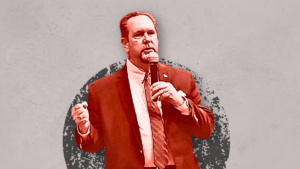
First-term state House Rep. Ken Fontenot (R-Wilson) shares the same views as Lt. Gov. Mark Robinson when it comes to abortion and education. And it turns out that he has something else in common with Robinson – they both seem to be “not very good at math” and confused about what purchases they’re legally allowed to make using campaign contributions.
Fontenot’s second-quarter expenditure report was released earlier this month and a large portion of his spending is highly questionable. The report shows a variety of expenditures, including multiple examples of excessive and seemingly personal purchases made using campaign donations, which raises concerns about the potential misuse of campaign funds.
Some of the most outrageous expenses reported by Fontenot’s campaign include:
- The purchase of one “Aeris Swooper Office Stool” for $800. Yes, it’s a single office stool and costs nearly as much as the monthly Fair Market Rent for a two-bedroom apartment in Wilson County ($823).
- Nearly $3,150 to himself for what he or his campaign labeled an “iPod” and “iPod attachment.” It’s likely that this is a typo and should read “iPad” since the iPod has been out of production since 2022. Regardless, the largest and most expensive iPad available from the Apple Store is $1,299, which leaves questions about the other approximately $1,850 he spent.
- A cellphone bill for $2,770.43 – but only for six months of service at around $461 per month. The average phone bill in 2024 is just over $140 per month.
- More than $7,500 was spent on fuel, meals and snacks. The words “meal” or “meals” appeared 77 times in his report, totaling $4,976; $2,142 was spent on fuel, which appeared 40 times; Snacks, which appeared on the report 61 times, totaled $535.
- Fontenot personally reimbursed himself more than $7,520 in his 2024 First Quarter and 2023 Year End Semi-Annual reports. These reimbursements included insufficiently detailed “purpose” explanations and expenditures that were previously reimbursed to companies (such as phone bills). Reports also show that Fontenot used campaign funds for personal use, like treating his wife to a Valentine’s Day dinner at a restaurant in Raleigh.
Fontenot’s expenditure reports should concern anyone who cares about good governance and ethics. These funds are donated with the expectation that they will be used for the candidate’s campaign efforts and not for an $800 stool or $5,000 worth of dinners.
Since Fontenot is a pastor at a church in Wilson, he may be familiar with Psalm 37:21 (“The wicked borrow and do not repay, but the righteous give generously”) and Proverbs 13:11 (“Wealth gained by dishonesty will be diminished, but he who gathers by labor will increase”), and if so, he should consider those messages and rectify the situation to ensure that his donors’ funds are being used appropriately.
If he is not familiar with those Biblical excerpts, perhaps he knows what state law says, specifically North Carolina G.S. § 163-278.16B (“Use of contributions for certain purposes”). The information contained within this section of the state’s law book should be particularly helpful for Fontenot and his team.