Source: HuffPost
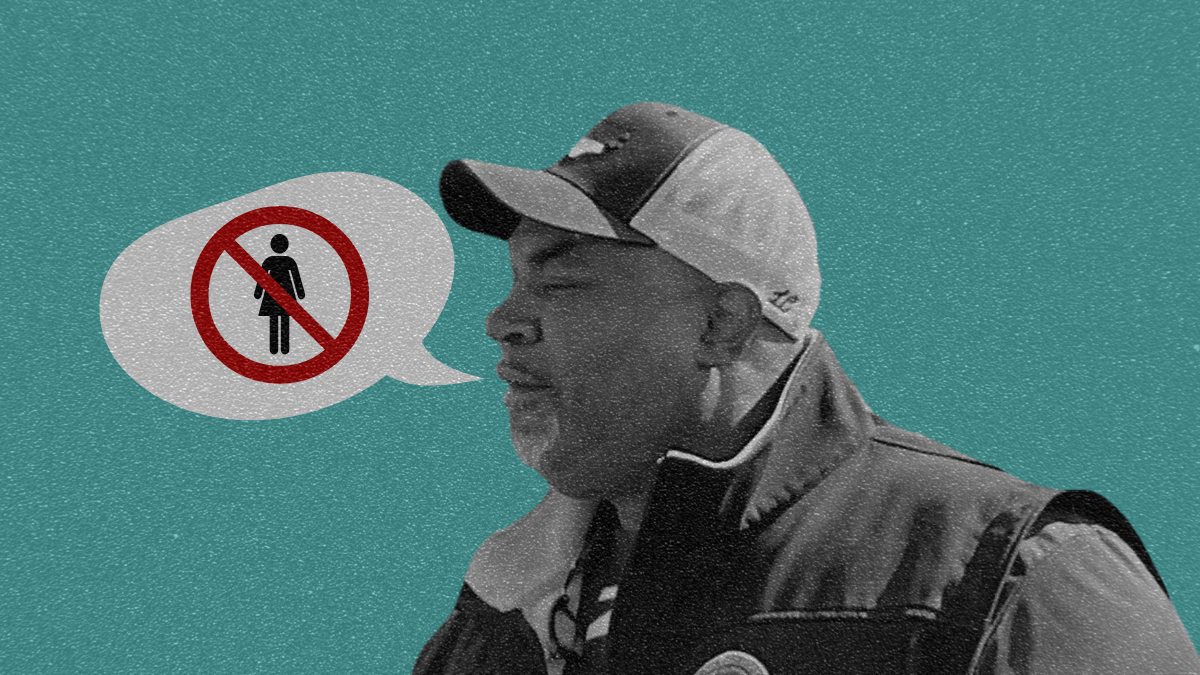
“I absolutely want to go back to the America where women couldn’t vote,” North Carolina Republican gubernatorial nominee Mark Robinson said in a newly resurfaced video from a March 2020 event hosted by the Republican Women of Pitt County.
Robinson defended his declaration with some bizarre logic. “In those days we had people who fought for real social change, and they were called Republicans and they are the reason why women can vote today,” Robinson said further at the Pitt County event.
Robinson’s interpretation of the suffrage movement aside, his comments fall in line with the series of misogynistic comments he’s made in his career.
He has called women “whores,” argued that women shouldn’t be leaders, joked about domestic violence, and defended the likes of Harvey Weinstein and Bill Cosby.
He is also stridently anti-abortion. He has stated that if he becomes governor he would sign a total abortion ban with no exceptions, and has called abortion “murder” “genocide,” and something that “shouldn’t ever happen.”
He seems to be particularly vitriolic towards pregnant and postpartum women. He has called a woman who had an abortion a “heffer,” breastfeeding mothers “shameless attention hogs,” and told women that when they get pregnant, it is “not your body anymore, it’s y’alls body” and “yes, that includes the daddy.”
In a particularly callous statement about women’s health and safety, Robinson declared that he doesn’t support abortions in the case of rape or incest because “That’s not any of my concern, that is Darwin.”
Robinson faces Democrat Josh Stein in this November’s general election. Latest polling from WRAL shows Stein with a two-point lead (44% Stein – 42% Robinson) in the race overall, and a ten-point lead among women (45% Stein – 35% Robinson).