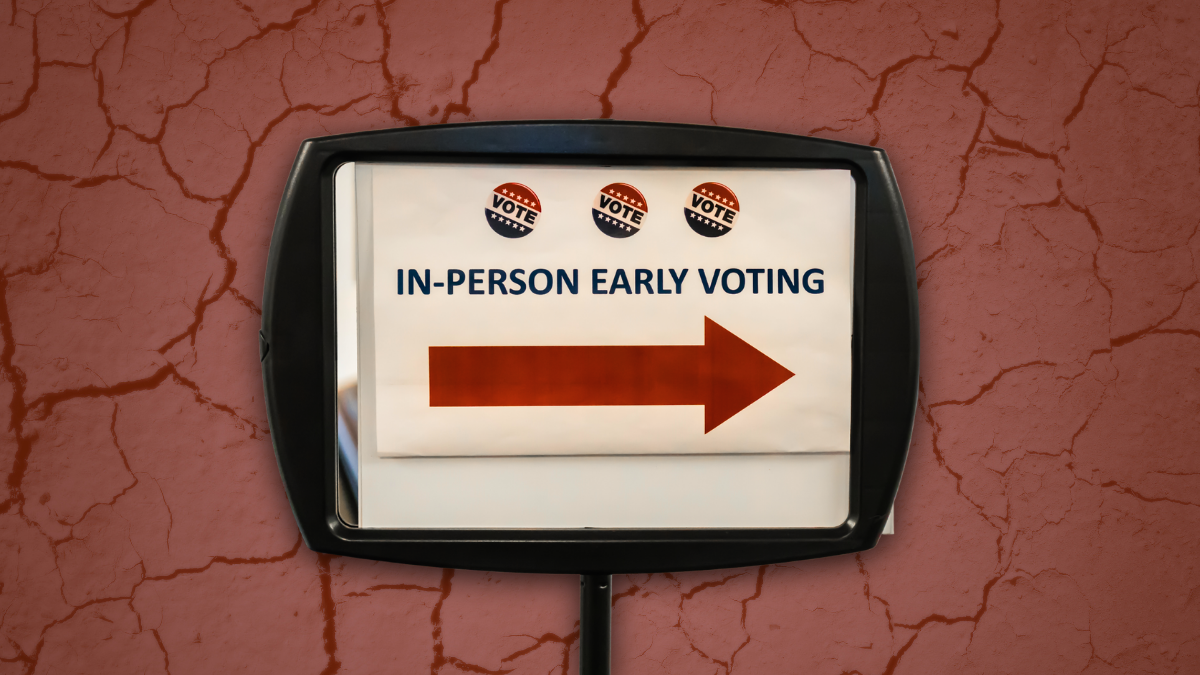
Early voting locations and hours for North Carolina’s 2026 midterm elections are now finalized statewide after a marathon meeting on August 20th of the North Carolina State Board of Elections, according to the News & Observer.
The board spent nearly 12 hours reviewing disputed early voting plans from 20 counties that had failed to reach unanimous agreements. In most cases, the Republican majority on the state board approved plans supported by the Republican majorities on county election boards. Many of the disputes centered on Sunday voting, campus polling locations and early voting hours.
The meeting featured tense debates over whether eliminating Sunday voting could disproportionately affect Black voters, whether students would have adequate access to the polls without voting sites on college campuses, and how much influence the state auditor’s office should have over local election decisions.
The 2026 midterms will be the first major election administered by the state’s new Republican-majority elections board. The change took effect last year after state lawmakers removed Democratic Gov. Josh Stein’s appointment authority and transferred it to Republican State Auditor Dave Boliek.
Stein has challenged the change in court and has criticized Boliek’s involvement in election administration. Speaking to reporters at an unrelated news conference, Stein accused Republicans of trying to make voting more difficult for people they believe are unlikely to support them.
Jason Tyson, a spokesperson for the State Board of Elections, defended the board’s process, saying in a statement that the decisions were thoughtful and the discussion was robust.
Debate Over Dallas Woodhouse
The Board of Elections meeting followed a series of reports concerning Dallas Woodhouse, a former elections liaison in the state auditor’s office. Woodhouse previously served as executive director of the North Carolina Republican Party.
Leaked text messages showed Woodhouse encouraging county election officials to eliminate Sunday voting and remove at least one campus polling site. Boliek’s office also said it had learned that Woodhouse deleted text messages that were subject to ongoing public records requests.
Woodhouse resigned from the auditor’s office last month, saying he had always expected his newly created position to be temporary. He has also argued that, once the state board finalized its plans, North Carolina would have more total early voting opportunities in 2026 than it did during the previous midterm election.
Woodhouse’s role became an early point of contention at the Board of Elections meeting. Democratic board member Siobhan Millen proposed barring board members from working with the state auditor’s office on matters that could favor a particular candidate, political party or demographic group.
Republican board member Stacy “Four” Eggers argued that the proposal unfairly singled out the auditor’s office. Board Chair Francis De Luca, also a Republican, pointed to past involvement by governors in election matters when they controlled appointments to the board.
Democratic board member Jeff Carmon responded by calling De Luca an “election denier,” prompting an angry exchange between the two.
The motion ultimately failed along party lines.
“And with that said, I hope we never hear the name Dallas Woodhouse again,” De Luca said.
That did not happen. Woodhouse’s influence remained a recurring issue throughout the meeting, with Carmon asking county board chairs about their communications with him. Democratic members also noted that several county officials who may have interacted with Woodhouse were not present at the hearing.
Sunday Voting Divides the Board
Sunday voting was one of the most common disputes. Fifteen of the 20 counties before the state board disagreed, at least in part, over whether to offer voting on Sundays.
In all but two of those counties, the Republican majority on the state board approved plans that did not include Sunday voting.
Republican officials cited a range of reasons for opposing Sunday voting, including difficulties finding staff and limited county budgets. Some also raised religious objections.
Matt Longworth, a Republican member of the Anson County Board of Elections, said his religious beliefs led him to oppose requiring people to work on Sundays.
Carmon said he was also a Christian but did not believe his faith prohibited Sunday voting. He argued that government election officials must serve residents of many different religious backgrounds.
Democrats also argued that Sunday voting can provide an important opportunity for people who work during the week and for Black voters, who have historically been more likely to vote on Sundays.
In some counties, Democrats proposed replacing longer Saturday voting hours with shorter Sunday hours. Republicans countered that counties should focus on plans offering the greatest total number of voting hours.
Democrats argued that total hours alone do not capture who is able to use those hours. Rebecca Whitaker, a Democratic member of the Lee County Board of Elections, said Sunday was the second-busiest day of early voting in the county during the 2022 midterms.
Sunday voting also figured prominently in Woodhouse’s leaked messages. In those communications, he suggested extending Saturday voting hours as an alternative to offering Sunday voting.
Jay DeLancy, a Republican member of the Lee County board, said that he had not considered eliminating Sunday voting until Woodhouse suggested that the recent U.S. Supreme Court decision limiting the Voting Rights Act could make such a change less vulnerable to legal challenges.
Among the 80 counties that submitted unanimous early voting plans to the state, only 13 included at least one Sunday voting day.
Campus Voting Sites Become Another Flashpoint
One of the most closely watched disputes involved Jackson County and whether to establish an early voting site at Western Carolina University.
The campus site was at the center of the first controversy involving Woodhouse’s role in local early voting decisions. Republican members of the Jackson County Board of Elections said they had been pressured by the auditor’s office to oppose the site.
The county board ultimately voted 3-1 to approve the Western Carolina University location. Board Chair Bill Thompson was the only member to vote against it.
Jay Pavey, a Republican member of the Jackson County board, urged the state board to approve the campus location. He said the auditor’s office had pressured Thompson, who was not present at the state hearing to explain his position.
The state board unanimously approved the Western Carolina University site as part of a compromise that also included a local recreation center supported by Thompson.
However, the Republican majority did not approve proposed campus voting sites at UNC Greensboro and North Carolina A&T State University. The issue had already generated controversy when the same campuses were denied early voting sites during the primary election, prompting a lawsuit from students.
UNCG and A&T did not have early voting sites during the previous midterm election. Carolyn Bunker, a Democratic member of the Guilford County Board of Elections, said students had presented compelling arguments for adding the locations.
Bunker said denying the campus sites could send students the message that they were not being treated as equal citizens.
“Providing accessible early voting on campuses is about more than convenience,” she said. “It’s about inclusion, civic participation and sending a message to a generation of young people: you matter, your voice matters, and you are welcome here.”
Eggers objected to that characterization, pointing out that another Democrat on the Guilford County board had supported the county’s majority plan without the campus sites.
He argued that students still have the same legal right to vote as other citizens and rejected the suggestion that the absence of campus polling sites meant students were being treated unequally.
With the Board of Elections decisions, the state board has now resolved the disputed early voting plans and finalized the locations and schedules voters will use across North Carolina for the 2026 midterm elections.