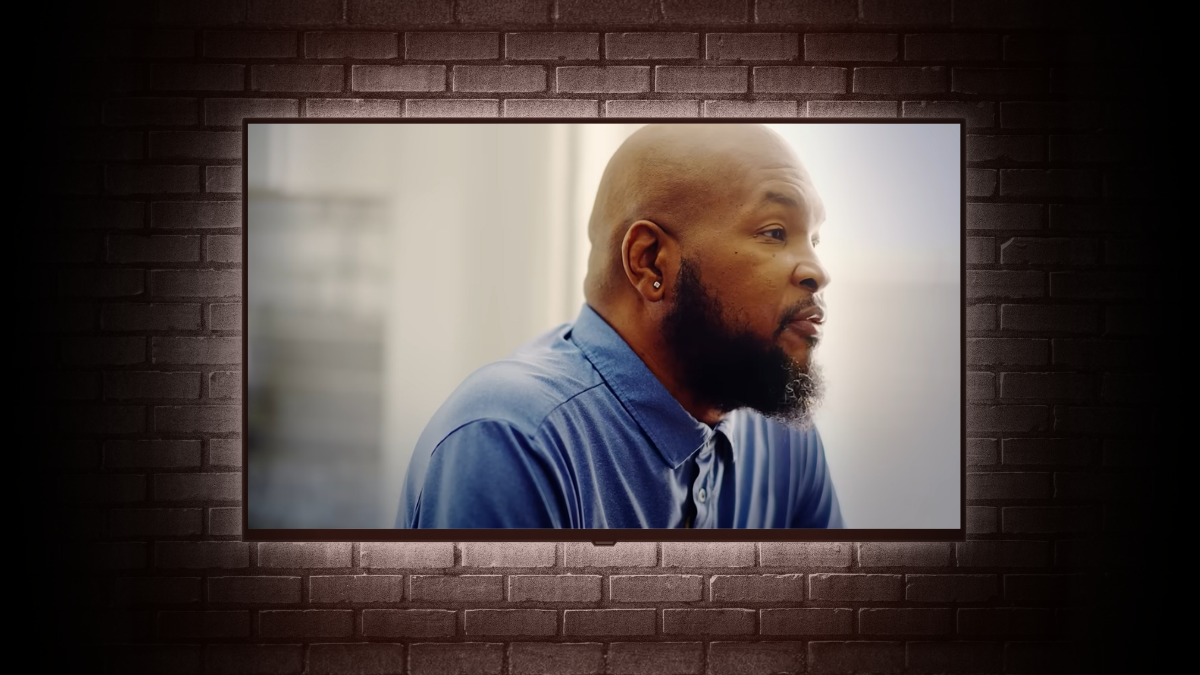
Ronald Hayes is a grieving father who has willingly told the story of his son’s murder in the hope that his pain might spare another family from experiencing the same unimaginable loss.
He never expected that story to become political ammunition in one of North Carolina’s most closely watched US Senate races.
Hayes believed he was participating in an advertisement about gun violence. Instead, his testimony became part of a $17 million summer advertising campaign targeting former Gov. Roy Cooper, the Democratic nominee for U.S. Senate.
“I’m just everyday people,” Hayes told the Greensboro News & Record. “I don’t want this smoke. I had no intention of trying to sway people one way or another about who to vote for. That’s not what I was doing.”
“I wanted to keep my son’s name alive and relevant. I got nothing against Mr. Cooper,” said Hayes.
But the commercial tells a very different story.
Hayes’ 23-year-old son, Shemar, a college football player, was murdered in March 2024. The teenager responsible pleaded guilty to second-degree murder in 2025.
Those dates matter.
After his son’s death, Hayes worked with Charlotte police and spoke publicly about the killing. He also wrote four books about what happened. So when he was approached about participating in what he understood to be an independent anti-gun-violence advertisement, he had every reason to believe his story was being used for the purpose he intended: keeping his son’s memory alive and calling attention to the devastating consequences of gun violence.
He agreed to an interview. He says he was instructed to speak as though he were addressing then-Gov. Cooper.
Then came the commercial.
Created by the Republican-endorsing Senate Leadership Fund, the 30-second spot uses Hayes’ grief to draw a connection between his son’s 2024 murder and the release of prisoners approved by Cooper’s administration in 2021.
The implication is unmistakable: Cooper’s decision somehow contributed to Shemar Hayes’ murder.
Except it didn’t.
Shemar Hayes was murdered three years after the releases in question.
His killer could not have been among those prisoners because he was not incarcerated for a prior offense. In fact, he was only 14 or 15 years old in 2021.
The commercial leaves those facts out.
Instead, viewers are given sad music, photographs of a murdered young man and a grieving father, followed by an accusation designed to make the viewer connect two events that could not possibly have been connected in the way the advertisement suggests.
That is not simply aggressive political advertising.
It is a deeply cynical use of a grieving parent’s pain.
“When I saw the ad, I called them and told them they used me,” Hayes said. “I was vulnerable. I was a victim. They were deceitful, conniving and sneaky.”
There is another important piece of context the commercial does not provide.
Cooper did not simply decide, on a whim, to release thousands of prisoners. In 2021, North Carolina, like the rest of the country, was dealing with the COVID-19 pandemic. Cooper’s administration accepted the terms of a lawsuit settlement that resulted in the release of roughly 3,500 nonviolent, medically vulnerable inmates, in part to address prison overcrowding and reduce health risks.
Could some of those people have committed crimes after their release? Certainly.
But that is not the issue here.
The issue is whether the man who murdered Shemar Hayes was one of them.
He was not. The facts do not support that implication. Apparently, however, facts are inconvenient things in Whatley’s campaign.
The Senate Leadership Fund describes its mission as supporting Republican candidates and using campaign tactics to aggressively counter Democrats.
And while the Hayes commercial never mentions Republican Senate candidate Michael Whatley, the political purpose is hardly difficult to discern.
What was a tragedy for the Hayes family became a campaign asset.
A grieving Black father became the face of an attack against a Democratic candidate. Hayes was not paid for his participation, and he told the News & Record that he did not know his testimony would be used this way.
And, perhaps most painfully, he says he would not have participated had he known what the advertisement was going to become.
That should bother all of us, regardless of political party.
There is a particularly ugly history behind this kind of political imagery in North Carolina.
In 1990, Sen. Jesse Helms’ campaign used a notorious television advertisement featuring a white man’s hands crumpling a job application rejection letter. The ad suggested that so-called racial quotas were keeping qualified white workers from getting jobs — a message aimed squarely at Helms’ Black opponent, former Charlotte Mayor Harvey Gantt.
Helms won that election with 54 percent of the vote. And, perhaps ironically, Michael Whatley has touted that his start in politics began with volunteering for Helms’ 1984 reelection campaign.
More than three decades later, the tactics may look different, but the underlying cynicism is disturbingly familiar.
This time, the prop is not a pair of white hands. It is a father grieving for his murdered son, turning his pain into political fodder.
And the most galling part is that the man whose tragedy is being used to attack Cooper does not even share the political conclusion the advertisement is designed to create.
Hayes is a Democrat.
“I’ve voted for Cooper in the past and will continue to do so,” he told the News & Record.
That fact may never make it into a television commercial, but it belongs in the story that Hayes was trying to tell about his son.
He was trying to keep Shemar’s name alive. He was trying to make something meaningful out of an unbearable loss.
Instead, a political campaign took that grief and turned it into a weapon.
That isn’t just hardball politics.
It’s a truly disgraceful way to treat a grieving father.