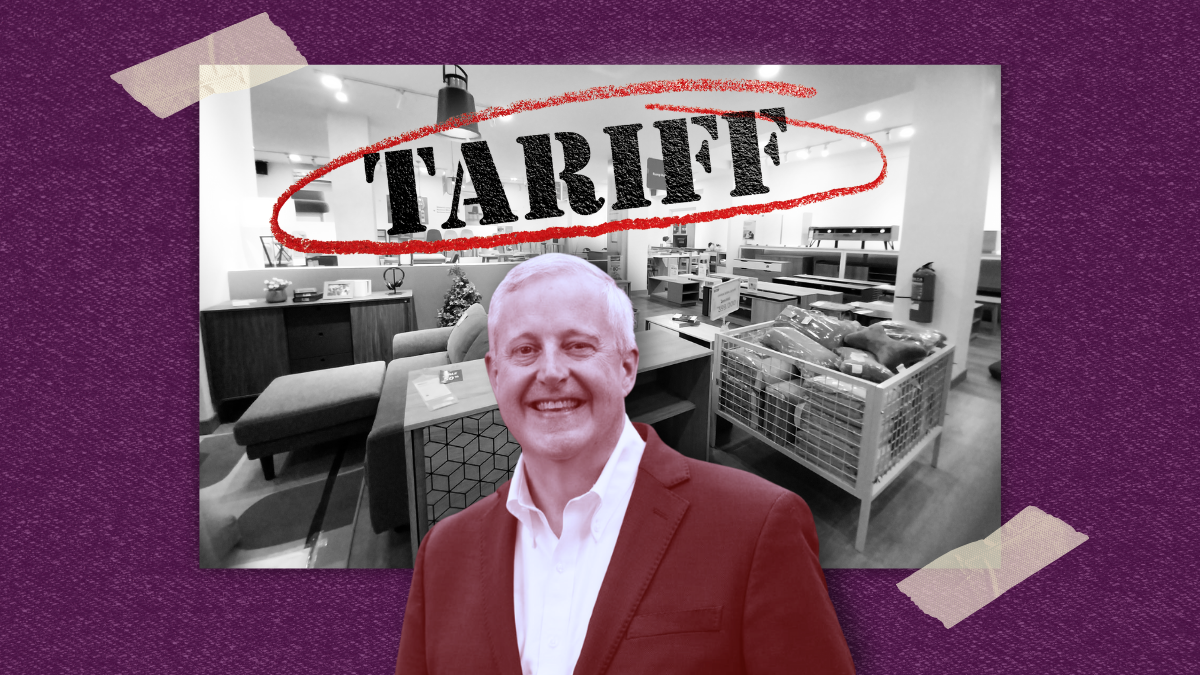
Though manufacturing is a very different business today than it was during North Carolina’s 20th-century furniture boom, High Point remains the heart of the state’s furniture industry. The city’s furniture leaders and mayor warned at a recent press event that federal tariffs are hurting sales and making long-term planning next to impossible.
High Point Mayor Cyril Jefferson pointed to the reality that prices are rising, not only in the furniture industry, but in every area of customers’ lives, while wages fall behind. When customers have to stretch their dollars to afford necessities like groceries and medicine, luxuries like new furniture become obvious places to trim the household budget.
“As we see those rising costs, demand goes down because consumers feel like they have choices to make.” Jefferson continued, “Because those customers have to make choices, our businesses have to make choices… choices about whether to downsize or layoff workers, and about whether they are still able to make the same kind of investment in our city that they thought they could make before. When they have to make those tough choices, we all lose out.”
While there is no single cause of climbing prices, Jefferson placed the greatest amount of blame on President Trump’s tariffs on American businesses that need to import materials.
“A tax by any other name is still a tax.”
Furniture manufacturing leaders in High Point agree that Trump’s tariffs are to blame. They say that higher costs on imported materials are influencing everything from pricing to production timelines. Ultimately, this leads to more expensive furniture for customers and an inability to plan ahead for manufacturers.
Head of the Phillips Collection warehouse, Mark Phillips, put it succinctly. “When tariffs raise the cost of key materials, these costs work their way into our pricing. It creates challenges for manufacturers and for the customers we serve.”
Phillips went on to say that the unpredictable, rapid announcements of Trump’s tariff changes “makes planning feel a bit like building on sand. Even the best design collections need a stable foundation.”
Jeff Arditti, head of Aria Designs, shared about the company’s attempts to reduce the strain on customers. “We’ve done everything we can to request our supply chain partners to absorb these increases, but the reality is that they’ve become too large to sustain…”
Mayor Jefferson said that the real conversation that needs to be had is one of leadership.
The U.S. Constitution assigns power over tariffs and other taxes to Congress, not the President. Trump has largely been able to run roughshod beyond his authority because Congress has done nothing to stop him. North Carolina will elect a new senator next November to replace the retiring Thom Tillis. The assumed frontrunners for the Democratic and Republican nominations, respectively, are former Governor Roy Cooper and former GOP Chairman Michael Whatley.
Even before announcing a run for Senate and receiving Trump’s endorsement, Whatley had been a vocal supporter of Trump’s tariffs. He has called them “record-setting” and “effective,” repeatedly voicing his “wholeheartedly support” for the everchanging import taxes. He has even gone as far as to falsely claim the tariffs have made groceries and other goods more affordable rather than more expensive.
Speakers at the High Point event were united in their rejection of Whatley as a potential leader for their community and for the state.
“The leadership of folks like Michael Whatley, who has encouraged these tariffs and said that he wholeheartedly stands behind them and finds them to be effective, is not the kind of leadership that we want,” said Jefferson.
Phillips added, “Who we elect matters. Vote for someone that will stand up to the tariffs that are driving up costs and hurting our businesses.”