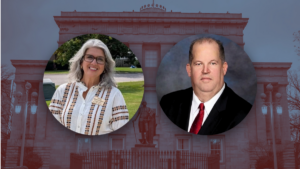

Dallas Woodhouse, the former leader of the North Carolina Republican Party who served as an elections liaison for the State Auditor’s Office, has resigned after he was caught pressuring county election officials to enact early voting plans that aligned with GOP priorities.
As Woodhouse departs, he leaves behind a changed Board of Elections– one that has become increasingly political under Auditor Dave Boliek.
“Woodhouse was acting pursuant to instructions from Auditor Dave Boliek. Boliek hired him, empowered him, and made him his liaison to county boards of elections,” said NC Voter Protection Alliance Executive Director Terence Everitt, in a press release. “The responsibility for those actions doesn’t end with Woodhouse’s resignation. It rests with the person who put him in that position and directed those efforts. The resignation of one staff member doesn’t erase the decisions that led to this point.”
In North Carolina, the governor has historically held the power to shape the State Board of Elections. But Boliek, a Republican, gained control of appointments to state and local election boards last year after Republicans passed a bill that took that power from Democratic Governor Josh Stein.
Shortly after the law took effect, Boliek hired Woodhouse to serve as a liaison to the state’s 100 county election board chairs. Woodhouse quickly became an enforcer for Boliek and the NCGOP, pressuring election officials to implement voting plans that benefited Republicans.
Several county election boards across the state have been divided over where to locate early voting sites and whether to offer weekend hours. Public records showed that Woodhouse had contacted local election board members to shape their early voting plans.
For example, the Granville County elections board recently voted to eliminate a popular site in Creedmoor, which leans Democratic, in favor of a new site in Stovall, which leans conservative. Woodhouse encouraged keeping four sites there.
In Anson County, Woodhouse discouraged the local elections board from eliminating weekend early voting hours. “GOP NCSBE can’t stomach that,” said one text from Woodhouse regarding their early voting plan. Anson County also leans Republican.
And in Jackson County, the Auditor’s office pushed for an early voting site at Western Carolina University to be moved off campus. Messages to the county chair show a directive to halt the local board’s June 2nd vote on whether to move the polling location. “Don’t let them have a vote,” read one text from Woodhouse to a board member.
Auditor Boliek has taken a more hands-on role in elections administration than the governors who previously held the appointment powers. Republican Governor Pat McCrory had no elections liaison, nor did Democratic Governor Roy Cooper.
Beyond Woodhouse’s work on behalf of the Auditor’s office, Boliek also “pushed hard on voter turnout especially in small Republican Counties like Yadkin,” the county’s elections board Chair Gary Mastin texted one of Boliek’s staffers this year.
Boliek’s influence over elections could expand even further. A bill under consideration in the state legislature would grant Boliek expansive power to conduct post-election audits. Democrats have objected to the idea because Boliek has shown no intention of remaining impartial, as he recently campaigned for Senate leader Phil Berger in the primary that Berger narrowly lost. Plus, Boliek himself is an elected official, giving him the power to potentially shape the outcome of the election for his own office.
As counties continue to prepare for the November midterms, Sunday voting and campus polling sites are likely to remain sources of conflict.
Early voting plans are due to the State Board of Elections by July 24. So far, 13 counties have submitted early voting plans that lacked a unanimous vote. Any county that fails to unanimously approve a plan must have its sites and hours decided by the State Board, which now has a 3-2 Republican majority because of Boliek.