Duke Energy Carolinas and Duke Energy Progress provide power to over 2 million customers in North Carolina. In the past year, the company has gotten a lot of media attention as they seek to raise rates, with an increase request being heard by the North Carolina Utilities Commission (NCUC).
As Duke Energy seeks to take more from the pockets of North Carolina families, an advocacy group is calling out the mega corporation for failing to protect its customers.
Sierra Club recently released its sixth “Dirty Truth Report”, which grades utility companies across the country on a variety of factors.
“For the past six years, we’ve evaluated and scored utilities for their plans to transition to clean energy based on commitments to retire coal, build clean energy, and not build new gas, “ the report reads.
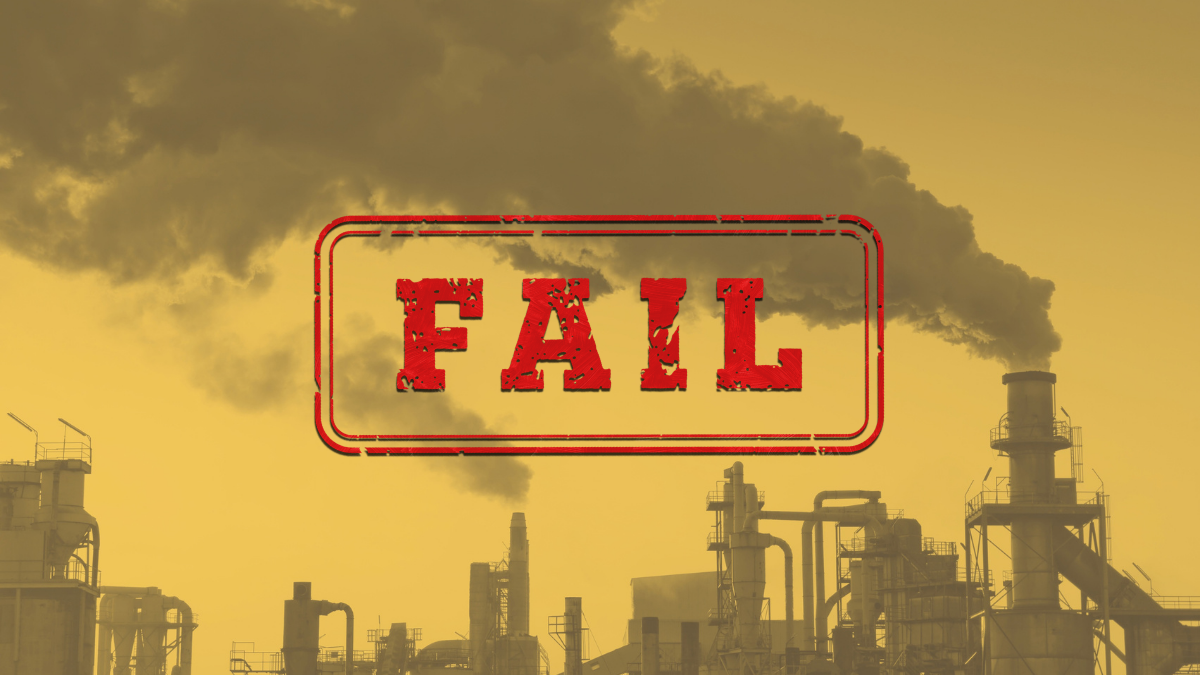
Duke Energy Carolinas and Duke Energy Progress both received a failing grade of 13% while Duke Energy came in at 12% for its nationwide operations.
According to the report, “Duke Energy fails across all three scoring categories; it is keeping coal online, planning a massive buildout of new gas capacity, and not building nearly enough clean energy. At the same time, it is backtracking on emissions reductions commitments and proposing new rate hikes.”
In North Carolina, Duke Energy has had help from the Republican-controlled General Assembly to make changes to the law that are beneficial to the company. Senate Bill 266, passed by the Republican majority, heavily worked in Duke’s favor by allowing them to retreat from their emission reduction goals, charge ratepayers for construction projects that could end up never being finished, and shift $87 million in annual payments from the state’s commercial and industrial customers to residential customers.
Despite opposition from Democrats, advocates, and ratepayers, Republican lawmakers pushed the bill through.
This was a win for Duke, but it was not by accident that the legislation so heavily favored the company.
Campaign finance reports show that many state lawmakers have received funds from Duke Energy. The company funnels money in the form of campaign donations to lawmakers in hopes they will support legislation that benefits the energy giant, such as SB 266.
Legislators also passed a law that gives Republicans the ability to appoint the majority of members to the state utilities commission, the body hearing Duke Energy’s current rate hike request.
Duke Energy first requested an 18% rate hike for its rate payers in North Carolina, but has since reduced it to a 9.5% increase after public outcry. Customers have flooded NUNC hearings and public comments to say they are already feeling overwhelmed by higher utility bills and that these increases are beyond what some households can afford.
The report also criticizes Duke for their lack of effort to move towards cleaner energy as it seeks to expand operations. Duke Energy argues that electricity demand will grow over the next 15 years, although recent data show energy use for residential customers and even retail customers slightly shifting down. But there is another factor leading to a higher demand: data centers.
Many communities in North Carolina oppose data centers, leading to some cities putting a pause on data center development. However, they are still on the rise around the nation and demand a high amount of resources to be run. North Carolina Attorney General Jeff Jackson has recently called for Duke to create a separate rate class strictly for data centers so the cost of their energy use does not end up being pushed onto the average residential ratepayer.
Regardless of the reasoning for the increase in energy, advocates are calling on Duke to rely more on clean energy as their source of power. Sierra Club says Duke Energy must move faster towards planning and implementing clean energy to avoid customers being forced to rely on “costly fossil fuels”. But instead, we’re seeing the energy giant double down on fossil fuels.
“It plans to build over 9 GW of new gas capacity by 2035, a 70 percent increase to its existing gas capacity. While expanding gas, Duke Energy is also keeping the vast majority of its coal online; it plans to have the third most coal generation still online in 2030 compared to all other utilities in the report,” according to the Sierra Club.
Duke Energy released plans to replace only 38% of its current fossil fuel use with clean energy by 2035.
“Duke is increasingly out of alignment with the needs of families and business throughout North Carolina,” said Chris Herndon, Director of Sierra Club’s North Carolina Chapter. “Duke is choosing dirty energy for tech companies to power their data centers, and we’re stuck paying for it with higher monthly bills and poor air quality. It’s good to see more political leaders finally take a stand against Duke’s backward priorities, but we need everyone in the state who cares about affordability and a healthy environment to tell the utility’s regulators at the NCUC that enough is enough.”
As Duke seeks to take more from North Carolina families and actively fails to protect rate payers, the company has found itself in the spotlight during this closely watched midterm election.
Candidates are being put on the spot for their ties to Duke Energy. Republican U.S. Senate candidate Michael Whatley, who used to work as an oil lobbyist, has been called on to sell his stocks in the company and to denounce their rate hike, neither of which he has done.
According to Cardinal & Pine, He and his family own somewhere between $163,000 and $445,000 in Duke Energy stock. The energy giant has also continued to be a major source of campaign donations to the North Carolina Republican Party, which then disperses the funds to a number of Republican candidates across the state.
Candidates are being asked about their support for data centers, what they plan to do about rising costs, and their ties to Duke Energy from campaign donations to stock investments.
Duke Energy is unfortunately not alone in its failure towards the people they are meant to serve. In the Dirty Truth Report, the overall score for all utility companies graded came out to a whopping 7 out of 100 possible points. This is an 8-point drop from the previous report and the lowest it’s ever been.
You can read the full Dirty Truth Report from Sierra Club here.