BEACON MEDIA GUEST FEATURE
By Sam Grote, CEO of N.C. Business Impact Forum
Duke’s latest request to the state to increase our power bills even more exposes our broken regulatory system. Learn why it’s happening—and how you can fight back.
Originally published on Beacon Media.
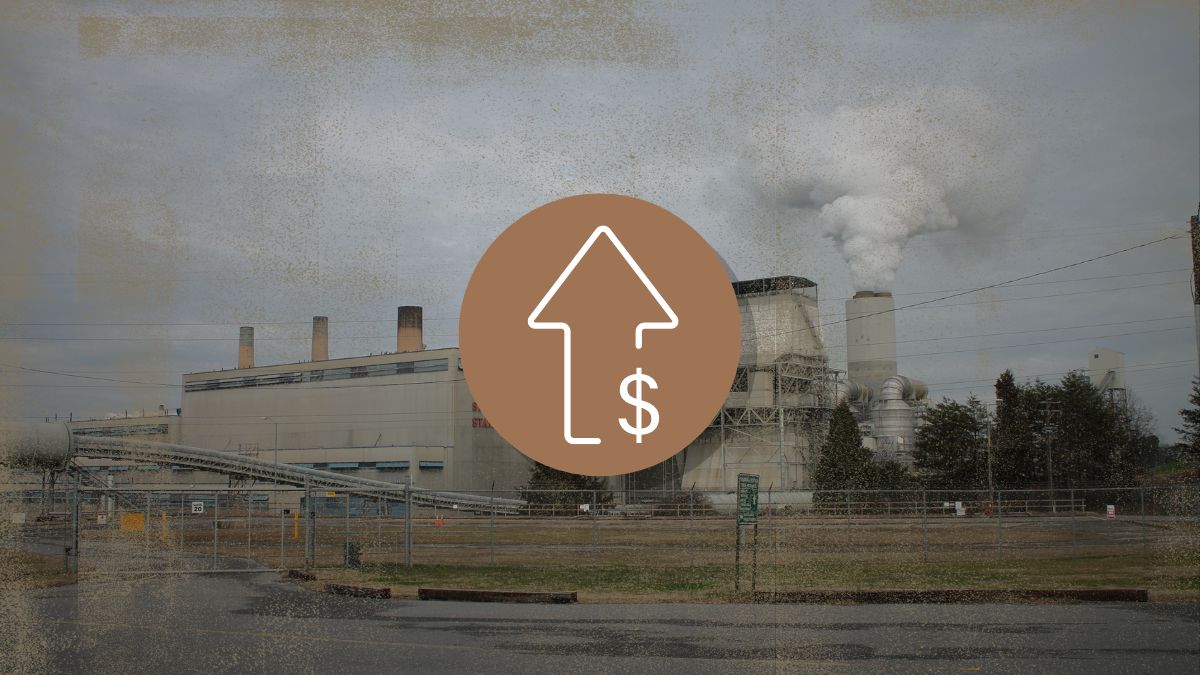
In October, Duke Energy told regulators and the public that its new energy plan, which replaced solar with more natural gas plants and nuclear reactors, would save customers money. Specifically, they projected that customer power bills would only rise by 2.1% per year over the next decade.
Just one month later, Duke filed a rate request with regulators seeking a 13% rate hike in 2027 alone. This one-year increase equals 60% of their entire 10-year projection they made the prior month!
This contradiction —or, perhaps, deceit — is not an accident. It’s the inevitable outcome of a system that provides Duke Energy a financial incentive to trick regulators into allowing them to build more expensive energy and reap more profit at the public’s expense.
Understanding this process starts with understanding how and why electric utilities like Duke are regulated.
The State-Regulated Monopoly
Duke is not a normal private company. They are what’s called a state-regulated monopoly. Most electric utilities in the U.S. are structured this way because electricity markets are not like normal markets.
For starters, electricity is essential — without it, businesses can’t operate and people literally die. In addition, this industry is a natural winner-take-all market. This is because the benefits to scale are so big that the larger utility in a region will eventually crush its smaller competitors and monopolize the market.
So without government involvement, you’d end up with private monopolies that could charge whatever price they want for this mission-critical service. That’s a problem.
It’s why starting in the early 1900s, governments granted them the legal right to be a monopoly with no competition. In return, the government — through public utilities commissions — would regulate their electricity rates and long-term energy plans. In North Carolina, that responsibility falls to the N.C. Utilities Commission, whose members are appointed by the governor, the state treasurer, and the state legislature.
Duke’s Financial Incentive to Stretch the Truth
In Duke Energy’s case, their electricity rates are set by a formula that allows them to earn a fixed percentage profit on their total capital investment. This means if they build more expensive energy facilities, they make more profit dollars, which boosts their stock price.
That’s what makes the Utilities Commission’s role so critical. If they fail to properly scrutinize Duke Energy’s plan, then Duke can game the system by building unnecessarily expensive projects to inflate their profit, at the public’s expense.
And that’s exactly what’s happening. In fact, Duke Energy’s CEO effectively admitted this to investors, saying the company’s profit growth is secure because it has “been building the capital plan and regulatory mechanisms for several years to accomplish it,” according to the February transcript a quarterly earnings call.
Here’s one illustrative example that will have a major impact on N.C.’s future.
Duke Admits Solar is Cheaper – Then Builds Less Anyway
In Duke Energy’s model to determine the plan that will minimize costs, they include an artificial limit on how much solar they are capable of building. This consequential constraint is buried deep in one of the plan’s thirteen appendices and is thus not well understood by the public.
Specifically, Duke Energy claims it can build only a base of 1,200 megawatts (MW) of solar per year—every single year from now through the year 2050, according to Duke’s analysis. No ramp-up. No learning curve. No improvement in build capacity over the next 25 years.
That’s insane.
In most years, Duke’s model recommends building the full amount allowed by this constraint. This means that this artificial constraint, not market forces, determines how much solar gets built.
Is 1,200 MW per year a reasonable limit? Absolutely not. For comparison, just last year, Texas added about 12,000 MW of solar. Florida added about 5,000MW.
Even if you adjust for population or land area, Texas and Florida are building solar at many times the annual rate TODAY that Duke claims they will be able to build in North Carolina for the next 25 years.
In Duke’s own public filings, they re-ran its model using a slightly higher solar cap — 1,800 MW per year instead of 1,200. This plan chose more solar and less gas and nuclear, which is much more expensive. According to these same filings, this would save the average household about $84 per year by 2035.
By imposing an arbitrary constraint on solar capacity, Duke Energy convinces regulators to approve more expensive gas and nuclear projects, to increase their profits and stock price at the public’s expense.
What North Carolinians Can Do Right Now
Importantly, North Carolina does not need new legislation to lower our power bills. Existing law already requires Duke to prove its plan is the most reasonable way to minimize power bills.
We just need the Utilities Commission to uphold the law instead of rubber-stamping Duke’s unreasonable plans. Their current plan is under regulatory review, and the Commission won’t make a final decision until late 2026. Here is what you can do now to influence the outcome.
- Directly pressure the Utilities Commission by submitting a public comment. Instructions are linked here: [https://tinyurl.com/duke-complaint] or can be found under the “Consumer Statements” portion of the Commission’s website.
- Demand your legislators have a plan to pressure the Utilities Commission to hold Duke accountable;
- Demand the Attorney General sue the Commission if they rubber-stamp this plan.
Every North Carolinian pays the price when the Utilities Commission refuses to do its job. We have both the right and the responsibility to demand that Duke Energy follows the law.
Sam Grote is CEO of the NC Business Impact Forum, a nonprofit that uses data-driven research to advance sustainable economic growth in North Carolina. This column is syndicated by Beacon Media and is available to republish for free on all platforms under Beacon Media’s guidelines.