Source: NC Newsline
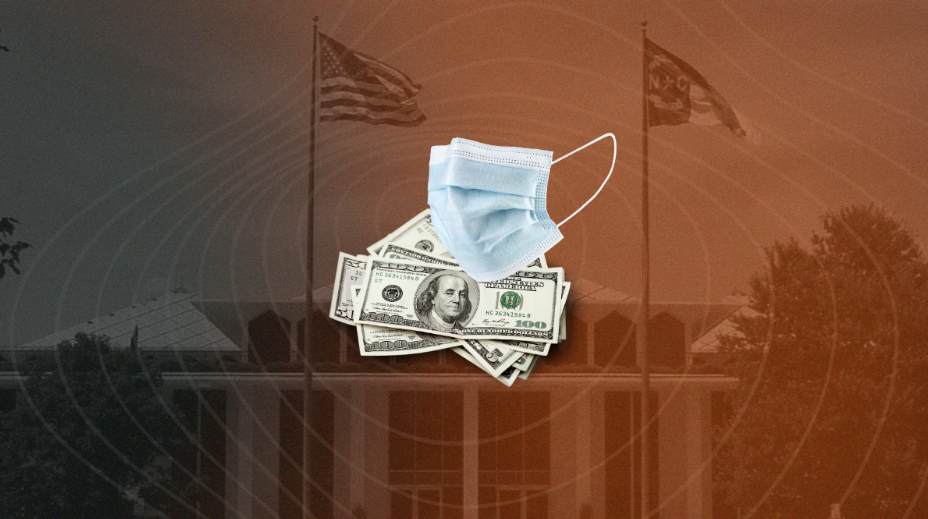
In a stunning move in early June, Republicans in the North Carolina State Senate introduced a proposal to make significant changes to state campaign finance law. The proposal, appended to an unrelated and also controversial bill to ban non-medical masks in public, would change campaign finance law to allow more dark money donations.
State law currently bans corporations and labor unions from giving money directly to political candidates. But both groups can give unlimited funding to 527 organizations, a type of federal political fundraising committee.
Republican lawmakers want to now allow these corporate-funded 527s to be able to donate to state political parties here in North Carolina. Political parties can give unlimited amounts of money to their parties’ candidates, so the proposal basically allows corporations to use political parties as middlemen to give money directly to their favored candidate. The proposal additionally limits disclosure requirements and makes it harder for the State Board of Elections to review questionable contributions.
According to veteran campaign finance watchdog Bob Hall, the proposed changes would provide wealthy individuals with new ways to give hundreds of thousands of dollars to support a North Carolina candidate without their name being identified with the donation.
In a letter to the State Board of Elections, the Democratic Governors Association said that the proposed changes “would effectively gut the state’s corporate contribution ban and undermine existing contribution limits by creating a significant loophole through which excessive and impermissible funds can influence North Carolina elections.”
Republicans, who control the State Senate by wide margins, passed the bill without debate or explanation on June 6. Senate Democrats walked out in protest and later held a press conference outside the legislature, denouncing the surprise changes.
“Senate Democrats walked out today because this election bill literally allows convicted felons and millionaires to buy our coming elections,” Sen. Jay Chaudhuri said. “We walked out today because it is critical we shine a light on a dark-of-night rushed process that will undermine our democratic process.”
“It’s no coincidence that such a rule change will be passed just two days after ads about Mark Robinson’s extreme abortion position started running,” Chaudhuri continued.
The bill went to the Republican-controlled state House early the next week where it also passed.