Source: News & Observer
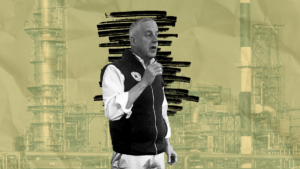
Governor Roy Cooper and advocates are condemning Duke Energy’s latest proposal that relies on short-term solutions to meet the state’s net-zero emissions goals by 2050.
According to the Associated Press, the state has three methods by which greenhouse-gas emissions can be reduced 50% from 2005 levels by 2030 and reach net-zero levels by 2050.
Called The North Carolina Deep Decarbonization Pathways Analysis, which was released by Gov. Roy Cooper earlier this year, the report lays out how the state can achieve pollution reduction and help lead the way in the nation’s clean energy transition.
Current policies get the state only 60% of the way to the 2025 goal, according to the analysis.
Duke Energy is one of many big players that will help the state achieve its 2025 goal, as a 2019 law requires Duke to reduce carbon dioxide emissions 70% from 2005 levels by 2030 and reach net-zero by 2050. The law also requires Duke Energy to consider reliability and affordability on top of the reduction of carbon emissions.
However, the big electric utility company is relying on nuclear energy in its latest plan iteration rather than solar and wind.
According to The News & Observer, environmental advocates are arguing that Duke Energy’s plan underutilizes solar energy and offshore wind, while depending heavily on natural gas, hydrogen and nuclear technologies that haven’t been built at scale to meet 2050.
“I think, certainly, that nuclear energy is one of the options that’s on the table, but to put a lot of your eggs in the basket of small modular nuclear power plants is not going to get us where we would need to be because we know how the not-in-my-backyard regulatory scheme works for that,” Gov. Cooper stated during an event at Schneider Electric’s RaleighHub.
For natural gas, The Energy and Policy Institute reports that Duke Energy’s plan will deepen its reliance on methane gas, which has been responsible for North Carolina consumers’ skyrocketing bills.
By 2035, Duke Energy plans to increase its methane gas production, despite the company’s claim that it will reach net-zero emissions by 2050.