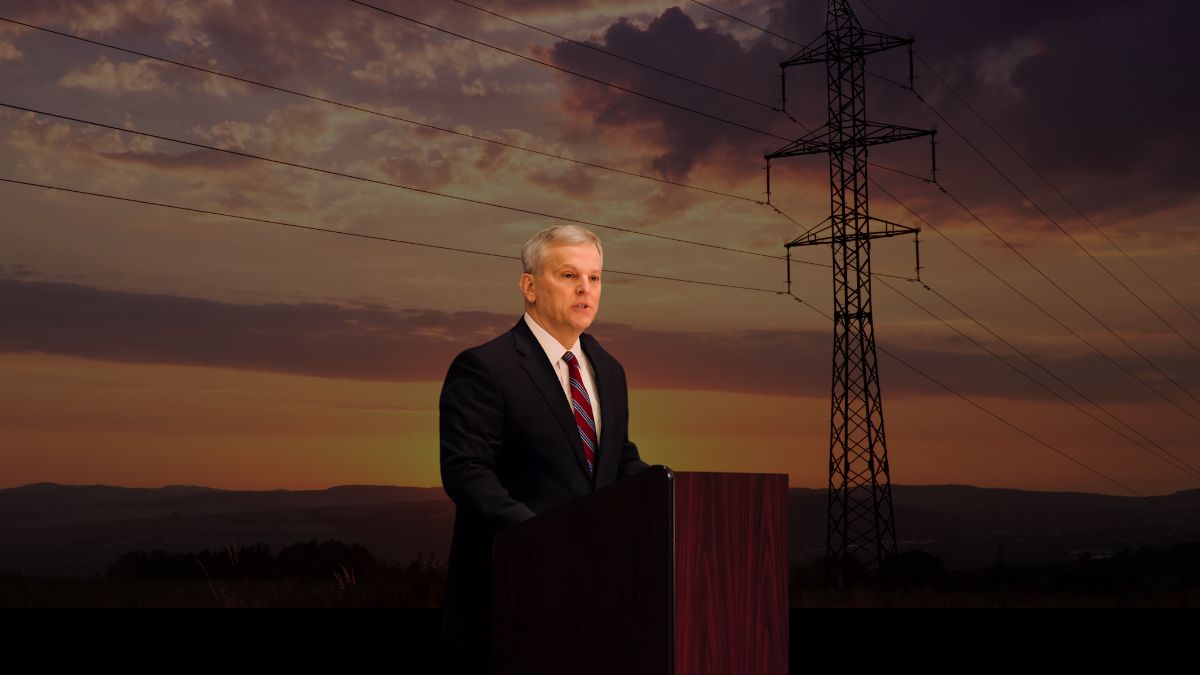
North Carolina Governor Josh Stein recently reaffirmed his commitment to keeping energy costs down for North Carolina households and small businesses. Gov. Stein met with a bipartisan group of governors, as well as two federal energy offices, to sign a Statement of Principles regarding the PJM electricity market, which covers parts of northeastern North Carolina.
The joint statement includes measures to protect both households and small businesses from rate increases resulting from capacity building. It also demands that any data centers that come to the region without building their own energy infrastructure must pay for the extra demand they place on local energy generation. In other words, big data centers can’t swoop in and strain county electric grids while pushing the costs onto locals, and utility companies can’t make normal customers pay for all the expansion by tacking it onto their monthly bill.
“I am committed to keeping electricity costs as low as possible for families,” Gov. Stein said. “That means making sure data centers pay their fair share for the electricity they require to be generated. I applaud the US Department of Energy for this initiative and remain committed to making life as affordable as possible for North Carolinians.”
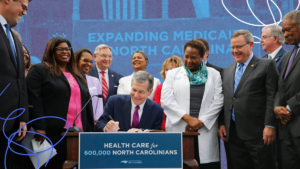
This move is the latest in a series of efforts Gov. Stein has made to push for more affordable and cleaner energy for the state. During his first month in office, Stein launched Energy Saver NC, an initiative to promote energy efficiency that provides rebates to households who install energy-efficient appliances, improve home insulation, or upgrade electrical systems. He has also made commitments to rebuilding energy infrastructure in western NC that was damaged by Hurricane Helene to be more resilient to future disasters.
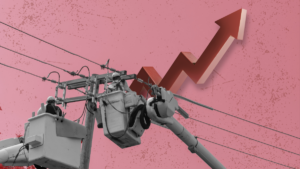
US households have seen monthly energy bills continue to climb higher, significantly outpacing inflation. The problem was only made worse by the passage of the One Big Beautiful Bill Act last July. Trump’s signature legislation canceled out many of the cost-saving tax credits created by President Joe Biden’s Inflation Reduction Act in 2022. The credits helped over 3.4 million people in 2023 and were expected to save Americans $38 billion on energy bills by 2030.
Trump’s One Big Beautiful Bill Act (OBBBA) is expected to raise the average US household’s energy bill an additional $130 per year by 2030. The law also cut back on clean energy investments that had been a driving force in helping NC build a bustling clean energy economy.
Since taking office, Gov. Stein has announced $4.9 billion in new investments and more than 15,000 new jobs from clean energy and clean technology companies, including JetZero’s announcement of the largest jobs commitment in state history at Piedmont Triad International Airport to manufacture high efficiency, low emissions aircraft.
The month after the OBBBA passed, Stein created a task force to look into ways for the state to manage increasing electricity demand while maintaining affordability, reliability, and carbon emissions reductions. The task force will submit its first annual report by February 15th to the Governor, the General Assembly, the NC Utilities Commission, the NC Rural Electrification Authority, and the public.
North Carolina residents are facing higher costs from another source as well. Duke Energy, which reported a $4.4 billion net profit in 2024, has requested permission to raise their customer rates by 15% over the next two years. That could mean paying an extra $240-$360 per year by 2028.
If approved, this rate hike would give Duke Energy an extra $1.7 billion in revenue as it looks to expand its electrical generation capacity to meet demand from anticipated data centers and population growth. Last summer’s misleadingly named Power Bill Reduction Act (SB266) was passed over Stein’s veto despite his warnings that it would lead to much higher energy bills. The law removed previous requirements that Duke Energy reduce carbon pollution by 2030, moved more cost responsibility from Duke’s big corporate customers to their residential customers, and allowed the utility to make NC customers pay the cost of building new power plants ahead of time even if they never actually get built.
The good news is that the group that will decide if Duke Energy can increase rates, the NC Utilities Commission, will hold several public hearings across the state beginning March 30th before a decision is made. Gov. Stein has already publicly spoken out against the rate hikes.
“Duke Energy’s proposed rate hike is simply too high and comes as the company is also retreating on more affordable clean energy. At a time when families are struggling to make ends meet, we should be doing everything we can to make life more affordable, not less. I will continue to fight on behalf of every North Carolinian to lower costs and grow the economy,” said Stein.
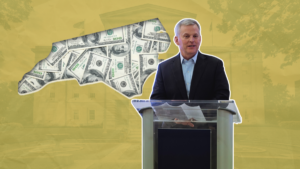
Stein is joined in opposing the rate hikes by NC Attorney General Jeff Jackson who plans to go before the Utilities Commission during the public hearings. “My office is intervening to make sure we find the right balance between investing in our energy infrastructure and protecting North Carolinians’ wallets,” said Jackson.
Duke Energy tried similar rate hikes in South Carolina last year, only to settle on a significantly lower amount after heated negotiations. Duke Energy is one of the most influential lobbyists in North Carolina politics, especially among Republican lawmakers. This may prove to be a test for just how much influence they have.