This editorial was originally published on Cardinal & Pine. The included number of confirmed measles cases in NC was updated on Feb 18th.
Measles, the most contagious disease to ever confront humans, is entirely preventable, doctors say. Now, an outbreak in neighboring South Carolina is putting North Carolina doctors increasingly on edge.
By: Michael McElroy
Imagine a western North Carolina emergency room in the middle of a dark winter’s night. Hospitals are scarce in this part of the state and this particular ER is the closest option for several counties, so while the waiting room is far from jumping given the hour, it’s not empty either.
Ten patients sit in the chairs or pace the waiting area, a mix of older people, pregnant women, and infants, the most likely age groups to suddenly find themselves needing a doctor while the rest of us sleep.
As a nurse emerges to call in the next patient, the automatic front doors open and in step two young children and their father. The kids look like they feel terrible. They’re lethargic. They’re coughing and their noses are running. Their eyes are glassy with fever.
The admitting nurse checks them in and figures them for the flu, sending them to sit with the others.
As the siblings head to their seats, they pass an older man with high blood pressure, and they sit near an immunocompromised teenager who looks like she ate something disagreeable. As they wait, the children cough steadily.
Fifteen minutes later, they’re called in to see the doctor too, but though they exit the waiting room, they leave something behind. Something that used to plague hospitals across the country but which none of the young doctors working that night have ever seen; something that already infected the older man, the teen, and lots of others in the waiting room.
It’s not the flu. It’s not a cold. And when the tell-tale rash appears on the siblings’ bodies a few days later, there will be no more misdiagnoses.
But by then it’s too late: Measles has now come back from the dead.
‘Most contagious’
This scenario is not at all far-fetched.
Driven by falling vaccine rates and the strength of a super virus, the United States is in the middle of its largest measles outbreak in more than 30 years.
“Measles is probably the most contagious vaccine-preventable disease that we have,” Dr. Michael Smith, division chief of pediatric infectious diseases at the Duke School of Medicine, told Cardinal & Pine.
“It is so contagious that if [kids with measles] come into the hospital, they really need to be in their own kind of reverse pressure, isolation room,” he said.
But the well known measles rash does not often present itself until four days after a kid starts feeling rough, and until then, the symptoms are indeed those of the flu, a cold, or a dozen other mild respiratory infections. And since vaccines virtually eliminated measles from the United States in the year 2000, most younger physicians in the US have never seen a case and may miss some of the early signs.
“The generation of folks that have never seen measles before might say, ‘oh, OK, go sit out in the waiting room and the doctor will see you in like 30 minutes or an hour later,” Dr. Smith said.
“And in the meantime you’ve infected everybody in the waiting room.”
Nine out of 10 people exposed to measles will become infected unless they are vaccinated or were previously infected.
On Jan. 4, three Buncombe County siblings visited the ER at Mission Hospital in Asheville between 2 and 6:30 a.m. They were feeling ill after returning from the holidays in South Carolina, which was well on its way to the biggest measles outbreak in the country.
All three children tested positive for measles a few days after their hospital visit. All three were unvaccinated. State health officials contacted everyone else in the waiting room to warn them about the exposure.
The outbreak is now
South Carolina has confirmed 920 measles cases and counting. More than 95% of the cases are in people who are unvaccinated or whose status is unknown.
While there are 22 known cases in North Carolina so far, many go unreported, so the actual number in both states is likely far higher. None of these cases are in fully vaccinated individuals.
North Carolina is a prime feeding ground. More than half the counties in NC have measles vaccination rates below what medical experts say is needed to ensure optimal community wide protection. On Wednesday, NC health officials announced a new text messaging system to alert the public to any potential exposures.
Under the leadership of Secretary Robert F. Kennedy Jr, a longtime vaccine skeptic, the US Department of Health and Human Services (HHS) has taken several steps to undermine the federal approach to vaccines, including announcing significant cuts to the recommended vaccine schedule for children.
The attack against vaccines has moved from the fringes of the internet directly into the White House, fueling confusion and a vaccine hesitancy that was already on the rise. If vaccine rates continue to fall, it will likely reopen doors to measles and other serious diseases that three generations of doctors hoped would be forever shut.
The measles vaccine officially eliminated the disease in the United States in the year 2000, but the country could lose its elimination status sometime this month. Trump officials call this benchmark the “cost of doing business.”
Medical groups call it “a warning about our systems.”
What is measles?
In “On Immunity,” a book about vaccines and the metaphors they inspire, Eula Biss writes that many immunologists often use war and combat terms to describe viruses, likening them to invading enemies. With measles, it’s easy to see why.
Assassins dressed in black that sneak over walls and hide themselves in shadow use less deception than the measles virus.
Measles can take up to two weeks after infection to reveal itself, making it difficult for health officials to trace a given case to its source. It can linger in the air unseen for two hours, setting traps in empty rooms. And like a saboteur, it can disarm your immune system, deleting its memory cells—a condition known as “immune amnesia”—and leaving you vulnerable to future attacks from any disease.
Measles is efficient, infecting 9 out of 10 unvaccinated people it comes in contact with.
Most people who get measles will recover, but measles is not some common bug.
“Even in a mild case, measles is a miserable disease,” the National Foundation for Infectious Diseases says.
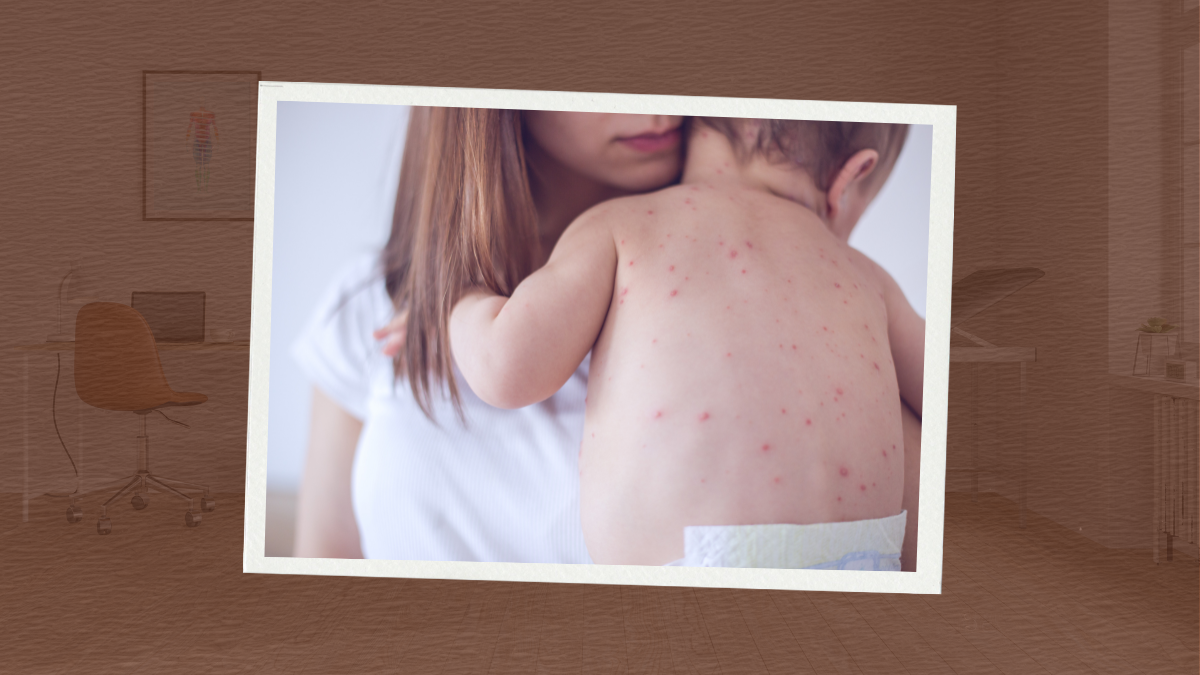
High fever. Dehydration. Sensitivity to light. It can cause pneumonia and seizures. It can blind you, and make you deaf. If the total case numbers skyrocket, the number of rare complications climbs too.
“When more people get the disease, we are going to see more people who have serious complications of the disease, including these very rare complications,” Charlotte Moser, co-director of the Vaccine Education Center (VEC) at the Children’s Hospital of Philadelphia, said in a Zoom interview.
Many of those complications are especially dangerous for children.
But if measles makes a full comeback, it won’t be just history repeating itself, doctors say. It will be a completely new, much bigger failure. There was no vaccine during the deadly outbreaks in the early 20th century.
There is a vaccine now.
Vaccines
In every year of this country’s existence, measles haunted hospitals, homesteads, and households from coast to coast. There were hundreds of thousands of recorded cases each year, 48,000 hospitalizations, and 400 to 500 deaths, according to records. But since most cases went unreported, the true number of cases was likely closer to 3 to 4 million a year, and the number of serious cases and deaths was also likely much higher.
Every year, that is, until 1963, when the first measles vaccine was introduced. There were several iterations between that first vaccine and the one widely used today, but each one drastically reduced the number of cases, hospitalizations, and deaths.
After an outbreak among vaccinated kids in 1989, a second dose was recommended at around age 4. Two doses of the vaccine—one at about a year old and the other at around age 4—are 97% effective at stopping infection. But the vaccines are not intended for pregnant women, infants, or people with compromised immune systems. And people who got only the single dose before 1989 could also be vulnerable. The measles shot is now given at the same time as the mumps and rubella vaccines, and is called the MMR vaccine.
But now, in increasing numbers, people are refusing the MMR vaccine entirely.
This rise of vaccine hesitancy is fueled in part by misplaced fears that the vaccines were somehow rushed or inadequately tested. That view is a “misunderstanding of the long track record of safety for these vaccines,” Dr. Smith said.
“Vaccines are tested adequately before they’re licensed,” he added, “and they continue to be monitored after licensure.”
And most vaccines have already undergone extensive testing before they ever get to a children’s trial, Smith said.
“Before a shot even gets into a kid’s arm, it’s been tested in adults. Before a shot gets into the millions of children who live in the United States, it’s been rigorously tested within the context of a randomized controlled trial and with several layers of approval,” Smith said.
‘A victim of their own success’
Dr. Bert Fields doesn’t need to imagine what it’s like to confront a measles outbreak. He remembers quite well.
“Doctors in my generation can give a unique perspective on vaccines,” Dr. Fields, a sports medicine doctor in Greensboro who spent most of his early career as a family medicine physician, told Cardinal & Pine.
“I’ve seen a polio outbreak. I’ve had chicken pox, I’ve had mumps, I’ve had measles.”
Many doctors don’t have that memory to fall back on, he said.
Measles may cause immune amnesia, but vaccines also can cause a kind of societal amnesia. Vaccines are so good at protecting against disease that people forget how bad the diseases were.
And death and physical harm are not the only kinds of trauma.
Over the last 30 years, vaccines saved the lives of more than 1.13 million children, but they also saved their parents and state and local governments more than $2.7 trillion in hospital bills and mitigation efforts.
Forgetting the diseases makes them easier to dismiss.
“The history of these terrible diseases before we had vaccines caused lots of death and suffering to people,” Dr. Fields said. “If we don’t remember our history, we’re destined to live it again.”
It’s a sharp irony. Vaccines were so good at defeating measles, rotavirus, and other diseases that they made it easier for them to come back.
“Vaccines have become a victim of their own success,” Dr. Smith said.
No comparison
No vaccine is completely without risk, but the dangers of the diseases themselves are far worse than any rare risk associated with a vaccine, doctors warn.
If 1,000 unvaccinated people catch measles, 1 to 3 of them will die. More than 200 of them will have to be hospitalized.
In 4 to 11 cases out of 100,000 infections, measles can cause subacute sclerosing panencephalitis (SSPE), a degenerative neurological disorder that can develop years after an initial infection, first showing itself in teenagers as a sudden drop in grades, or changes in personality. Some treatments can slow the decline, the Children’s Hospital of Philadelphia (CHOP) says, but “the disease invariably results in death.”
Compare that to the vaccine. The most common side effects are a sore arm and brief fever. In 1 out of 3,000 to 4,000 cases, a fever can get high enough to cause seizures, but “while [the] seizures, are scary, they do not cause long-term harm,” CHOP says.
Kennedy has claimed that the measles vaccine causes deaths every year, but that is not true, medical institutions say.
“There have been no deaths shown to be related to the MMR vaccine in healthy people,” the Infectious Disease Society of America (IDSA) says.
The vaccines are not intended for people with weakened immune systems, however.
“There have been rare cases of deaths from vaccine side effects among children who are immune compromised, which is why it is recommended that they don’t get the vaccine,” the IDSA says.
A house of open doors
Children with cancer can’t get the vaccine, but they can get measles, and that is especially dangerous.
Vaccines don’t just protect individuals. They protect everyone.
When you get the vaccine, you’re helping to protect those pregnant women and kids with immune issues who can’t get it themselves. And though the vaccines are 97% effective, that still leaves 3% of the population who are also left without protection.
That is why herd immunity is so important, and why it is so dangerous when overall vaccination rates decline even a little.
An entire community is protected when at least 95% of its residents are vaccinated. Less than half of the 100 counties in North Carolina meet that mark.
“A vaccinated person living in a relatively unvaccinated community is more likely to get a vaccine-preventable disease than an unvaccinated person living in a highly-vaccinated community,” Moser said.
“A pathogen survives by moving from one person to another. I liken it to a house with a whole bunch of open doors. If you have a whole bunch of open doors, it’s easier to pass through that house.”
People wanting to prioritize individual freedom over public health overlook how in this case, their choice endangers others, Moser said.
“There are people within our community who simply don’t have that choice … that’s what makes this different: Your choice may harm me or my family member,” she said.
“No matter how separate we are, we all live together,” she added. “These pathogens are waiting to come back.”
An earlier version of this article misspelled the last name of the author of the book,”On immunity.” She is Eula Biss, not Bliss.
Michael McElroy is Cardinal & Pine’s political correspondent. He is an adjunct instructor at UNC-Chapel Hill’s Hussman School of Journalism and Media, and a former editor at The New York Times.
Cardinal & Pine is owned and operated by COURIER, a pro-democracy news network that is building a more informed, engaged, and representative America by reaching audiences where they are online with factual, values-driven news and analysis at the local and national level.