Jon D’Angelo started the week by telling his home health care provider that they were getting a pay cut. D’Angelo is one of many North Carolinians who receive services in-home under a Medicaid program for disabled adults.
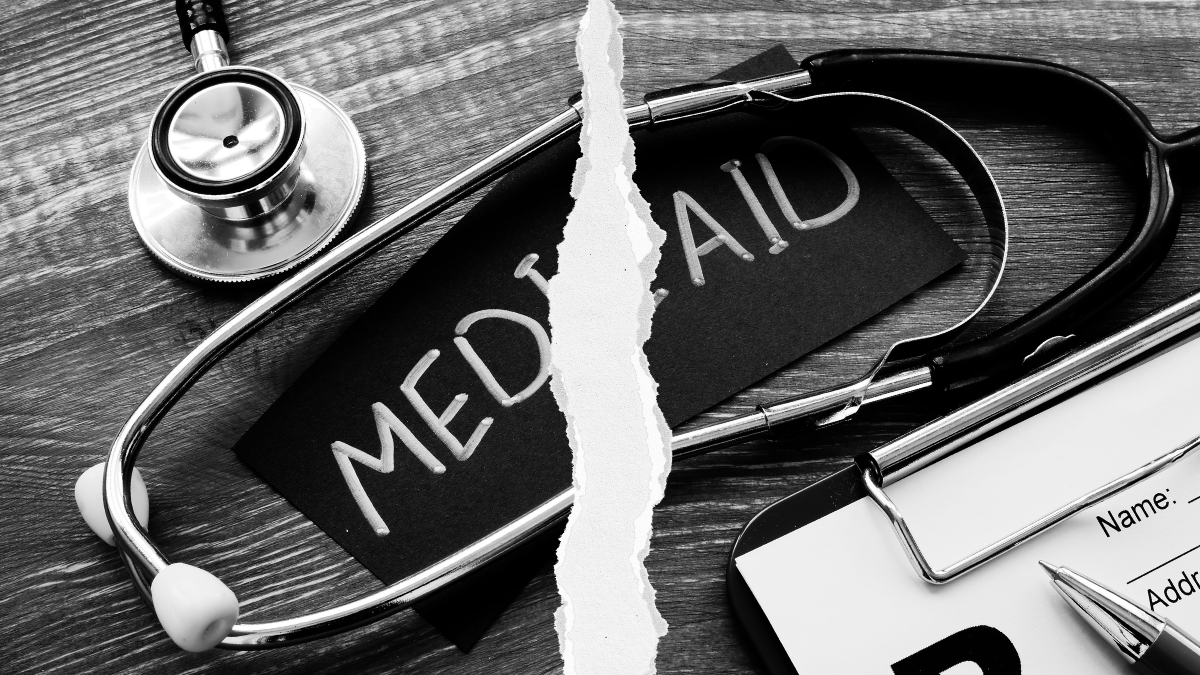
As of Oct. 1, that program is receiving 8% less money.
“They were kind of shocked,” D’Angelo, who is chairman of the NC Council on Developmental Disabilities, told NC Newsline. “With most jobs the pay goes the other way, not down.”
What Mr. D’Angelo is experiencing is the consequence of the Republican-led General Assembly failing to allocate enough money to keep Medicaid rates stable. The state Department of Health and Human Services warned in August that there would be cuts to provider rates unless the legislature closed the $319 million gap in funding that their July stopgap budget created. Lawmakers had until the end of September.
Republicans in the state House and Senate were not able to agree in time on a measure that would provide more money. The stall in negotiations hinges on the unrelated issue of a children’s hospital planned for Apex.
The cuts to Medicaid insurance rates mean that health care providers will receive less money for caring for the 3.1 million North Carolinians who depend on the program to pay for doctors, dentists, hospitalizations, nursing home stays, and more.
Primary care practices, particularly those in rural and underserved parts of the state, will be impacted the hardest, according to the North Carolina Academy of Family Physicians.
A survey conducted by the Academy of Family Physicians and the North Carolina Pediatric Society received 429 responses from their members assessing the 3% to 10% rate cut impacts.
According to Dr. Mark McNeill, president of the Academy of Family Physicians, 44% of respondents indicated they would have to limit the number of Medicaid patients they see, and nearly 10% said they would have to stop seeing Medicaid patients altogether.
The survey also found that more than a quarter of family physicians would have to lay off staff, and just over 20% said they would have to lay off medical staff.
In addition, nearly 23% said the cuts would result in one or more physicians retiring early.
Another consequence of the failure to fully fund NC Medicaid is the shuttering of a program that has provided nutritious food, safe housing, and transportation for doctors’ visits to the most vulnerable rural North Carolinians.
The program, which began five years ago, was called the Healthy Opportunities Pilot, or HOP.
An analysis by the UNC School of Medicine found the HOP program saved $1,000 annually for each of the 13,000 Medicaid recipients enrolled in the pilot, which covers three rural swaths of the state.
This is an especially cruel slap in the face to those in the western part of the state still recovering from Hurricane Helene.
“There’s a lot of heartache and disappointment to watch the demise of something that was stabilizing the community and helping people get back on their feet,” Laurie Stradley, chief executive of Impact Health, told The New York Times. “We’re going to see ripple effects for years to come.”