
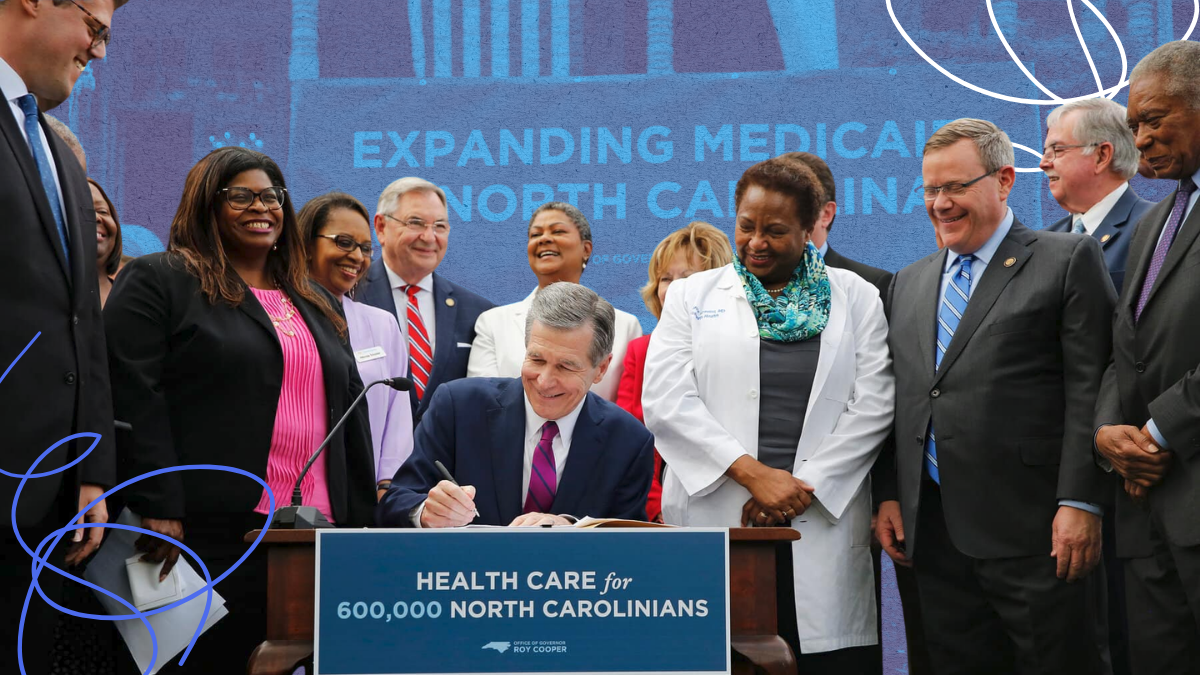
Three years ago, former North Carolina Governor Roy Cooper signed Medicaid expansion into law, opening the door for more than 650,000 North Carolinians to access affordable health care.
The policy marked a major turning point for the state after more than a decade of advocacy from health care providers, community leaders, and working families who pushed to expand coverage. Medicaid expansion extended access to care for low-income adults, including parents, workers, and people in rural communities who previously fell into the coverage gap.
The impact was immediate. In the first year alone, expansion enrollees filled more than 4 million prescriptions for conditions like heart disease, diabetes, and seizures. More than $62 million in dental services were also covered, giving thousands of North Carolinians access to care they had previously gone without.
Medicaid expansion has been especially critical in rural parts of the state. More than one in three enrollees, roughly 217,000 people, live in rural counties where hospitals and clinics often operate on thin margins. Expansion has helped stabilize these providers, protecting access to care while supporting local economies.
The law was made possible by a bipartisan coalition, with Cooper working across the aisle to deliver one of the most significant health care expansions in North Carolina history.
But that progress is now at risk. Congressional Republicans have backed proposals that would roll back federal support for Medicaid and the Affordable Care Act. Analysts have warned that these changes could strip coverage from more than 600,000 North Carolinians and cost the state an estimated $32 billion in federal funding.
Three years after expansion, the results are clear. Hundreds of thousands of North Carolinians have gained access to preventive care, prescriptions, and financial stability.
The anniversary is a reminder of what is possible when leaders prioritize working families and build coalitions to lower costs and expand access to care. It also underscores what is at stake as new proposals threaten to undo that progress.