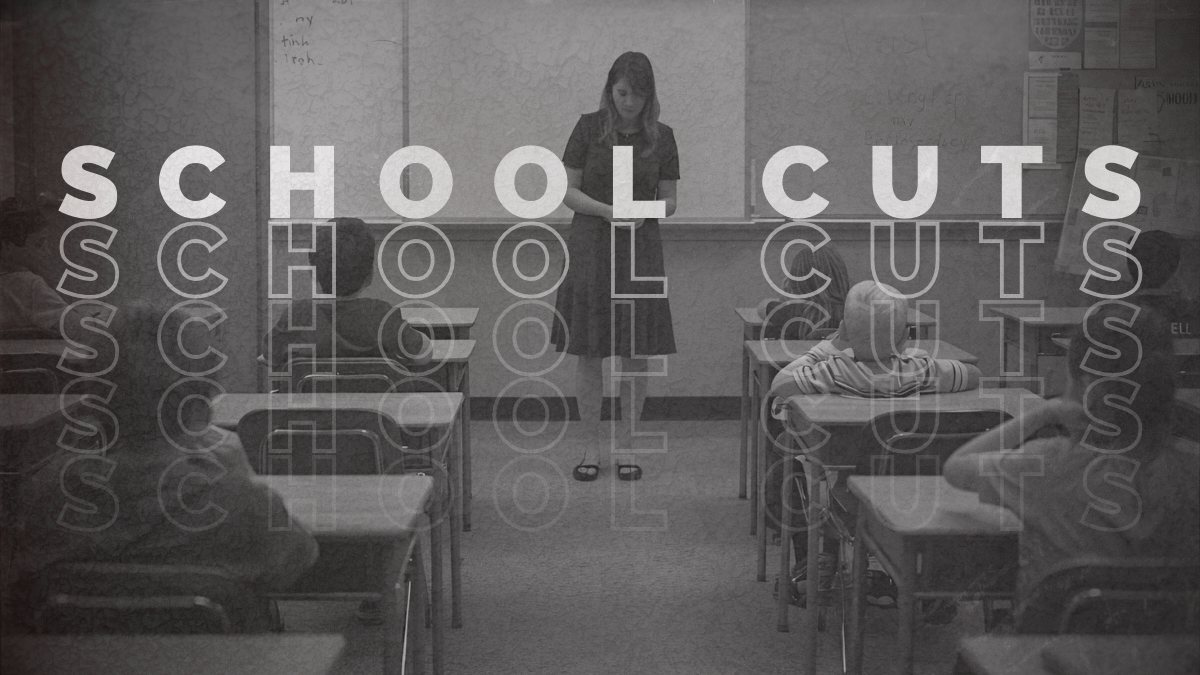
When students return to public schools across North Carolina, they may notice some familiar faces missing. According to the News & Observer, budget cuts and delayed state funding have forced districts to eliminate hundreds of positions, freeze programs, and prepare for the possibility of even deeper federal cuts under the Trump administration.
“It really puts all school districts in a position of what I call a holding pattern,” said Wake County Superintendent Robert Taylor. “We can’t plan to do anything more, and we usually end up doing something less because we don’t know what the funding is going to be. And so this has been a unique year.”
Districts are working to shield North Carolina’s 1.5 million public school students from the fallout, but educators warn the impact may be unavoidable.
Staffing Losses Across Districts
Budget pressures have led to significant staff reductions statewide:
- Durham Public Schools cut 112 teaching jobs and 27 central office positions.
- Chapel Hill-Carrboro City Schools eliminated 114 teaching and central office roles.
- Wake County Schools made nearly $20 million in reductions, cutting 286 positions — mostly assistant principals, counselors, secretaries, and nurses — while avoiding direct classroom teacher layoffs.
Taylor said Wake relied on retirements and vacant positions to limit classroom impacts, but educators remain concerned. “Every single staff position impacts learning conditions, whether it’s a bus driver, an assistant principal, a counselor, a classroom teacher, a cafeteria manager,” said Christina Cole, president of Wake NCAE. “All of those positions directly touch our students and what happens in schools. And the fewer and fewer staff positions that we have, the more impact on student learning.”
State Budget Gridlock
The biggest challenge for districts is the lack of a comprehensive state budget. Lawmakers approved a limited “mini-budget” in July to cover enrollment growth and step pay increases, but no new raises or broader funding have been approved. If no final budget is passed, schools will continue operating on last year’s funding levels.
“Here we sit with no state budget,” Durham school board member Natalie Beyer said. “We got a little mini-budget and got a little bit of a pay step increase. We have no idea what’s going to happen, and we’re in August.”
District leaders are holding back on new hires or programs until there’s clarity, fearing they may otherwise have to make mid-year cuts.
Federal Funding at Risk
Uncertainty is compounded by federal delays and proposed cuts. In July, North Carolina received its $165 million share of federal education funds three weeks late, after the Trump administration froze $6.8 billion in nationwide allocations.
Looking ahead, the administration has proposed $12 billion in education cuts — including an estimated $200 million loss for North Carolina. Wake County alone could lose nearly $13 million in federal funding.
“These systems are going to be devastated by these cuts,” warned Heather Koons of Public Schools First NC. “Some districts rely heavily on federal funding.”
Programs serving migrant students and English Language Learners (ELL) are especially vulnerable. Hispanic students make up about three-quarters of the nation’s ELL population. Taylor stressed that schools remain legally and morally obligated to educate all students. “They have a right to a free and appropriate public education,” Taylor said. “It’s still our responsibility to educate those kids, that we’ve got to do those things to help them be proficient in speaking English.”
Teachers Press On
Despite the uncertainty, educators say they’re determined to provide the best possible environment for students. “Public school staff are resilient, and they’re going to make a way out of no way because that’s what our students deserve every school year, regardless of funding,” said Cole of Wake NCAE. “But it’s disrespectful, and we all deserve more”.