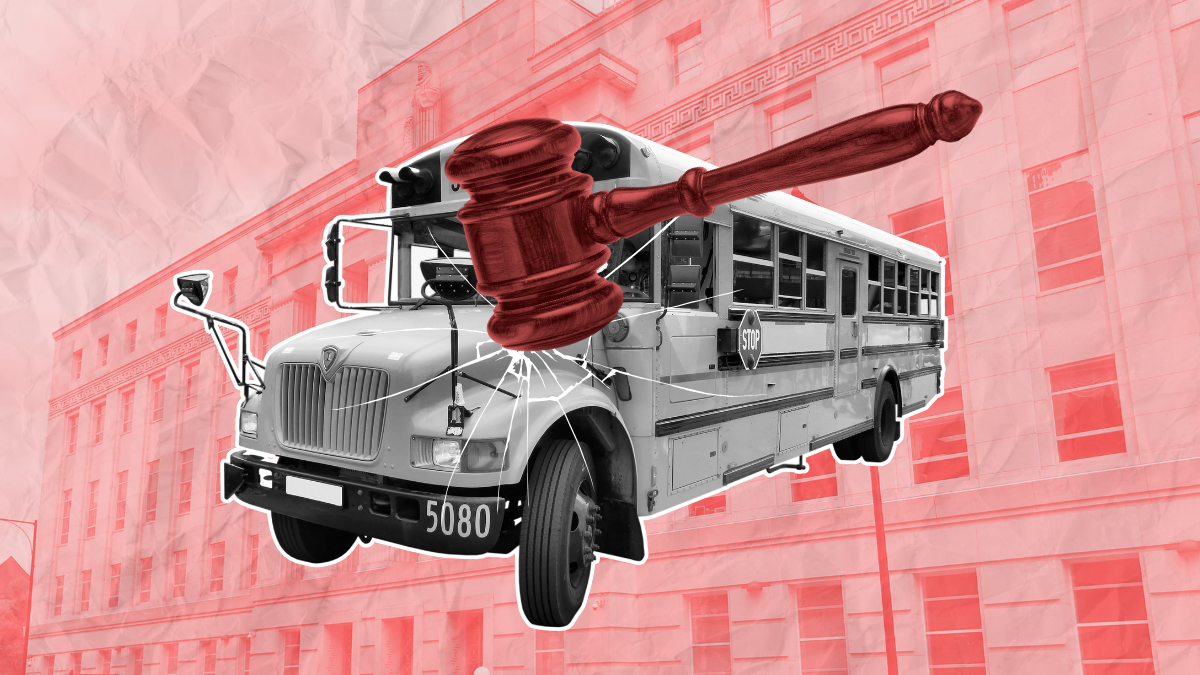
The North Carolina Supreme Court has overturned years of rulings in the state’s long-running Leandro education case, declaring that lower courts did not have the authority to mandate sweeping statewide school funding changes, according to NC Newsline.
In a 4–3 decision issued more than two years after oral arguments were heard in February 2024, the court vacated a 2023 trial court order that required the state to transfer hundreds of millions of dollars for education improvements. The ruling also nullified an earlier Supreme Court decision that had affirmed the trial court’s authority to enforce that funding.
Writing for the majority, Chief Justice Paul Newby said the trial court had exceeded its jurisdiction, arguing the case had expanded far beyond its original claims.
According to the ruling, orders issued after the case evolved into a broader statewide challenge in 2017 are “void.”
The decision drew sharp dissent. Justice Anita Earls argued that the court was failing to uphold constitutional protections, writing that it appeared “unable or unwilling to meaningfully check constitutional rights violations—particularly those originating from the legislature.”
The Leandro case began in 1994, when several low-wealth rural counties sued the state over inadequate school funding. In 1997, the state’s highest court ruled that North Carolina was violating students’ constitutional right to a “sound, basic education,” a principle that has remained intact despite this most recent ruling. However, the latest decision removes the court-ordered mechanisms designed to enforce that right and returns control over education funding to the General Assembly.
Lawmakers have long resisted fully funding a court-approved plan to improve public schools. Both Democratic and Republican legislatures have fallen short of meeting the spending levels outlined in the Comprehensive Remedial Plan, with Republicans in recent years arguing that only the legislature, not the courts, has the constitutional authority to decide how taxpayer money is spent.
The ruling comes at a time when school districts across North Carolina are already under growing financial strain. Systems like the Wake County Public School System are grappling with rising costs, flat or declining enrollment, and the expiration of federal pandemic relief funds that had temporarily boosted school budgets.
Wake County, the state’s largest school district, has seen enrollment dip slightly, while operating costs continue to climb. The district has projected more than $60 million in increased expenses, driven largely by the cost of maintaining facilities, supporting salaries, and the surging cost of benefits and insurance. In response, officials have already cut tens of millions from their budget and are seeking additional local funding to close the gap.
Wake County Superintendent Robert Taylor recently warned of difficult choices ahead, including potential staffing reductions. A proposal to cut 130 special education teaching positions to save $18 million met resistance from school board members, underscoring the challenges districts face in balancing budgets while maintaining services.
Similar pressures are playing out statewide. Districts in places like Durham, Chapel Hill, and rural counties are considering school closures, program cuts, and consolidation as they confront declining student populations. Because school funding is largely based on enrollment, fewer students mean less revenue, even as fixed costs such as building maintenance, transportation, and administration remain largely unchanged. Granville County has already closed schools in an effort to cut costs, despite the population of the county growing. Cumberland County Schools is considering closing schools as enrollment declines and facilities go without needed upgrades.
At the same time, competition from charter and private schools has grown, aided in part by programs like North Carolina’s Opportunity Scholarship, which subsidizes private school tuition. Demographic trends, including declining birth rates and shifting migration patterns, are also contributing to enrollment stagnation or decline in most districts.
Financial uncertainty has been compounded by a state budget impasse, leaving districts unsure whether additional funding or teacher pay raises will materialize. Meanwhile, inflation has driven up the cost of supplies, construction, and operations, while teacher salaries, largely set by the state, have struggled to keep pace.
Experts say these overlapping pressures are forcing school systems into difficult and sometimes unfamiliar decisions. Districts that expanded staffing using temporary federal relief funds are now struggling to sustain those positions. In some cases, failure to adjust spending to match enrollment declines has led to significant deficits and layoffs.
Despite these challenges, education leaders emphasize that maintaining teacher quality remains critical. Investments in teacher training, support, and retention are seen as essential, even as districts weigh cuts and restructuring.
Against this backdrop, the state Supreme Court’s decision effectively removes a major legal avenue for compelling increased state investment in public education. While the constitutional guarantee of a sound basic education remains, responsibility for how, or whether, to meet that standard now rests squarely with state lawmakers, even as local districts face mounting financial and operational pressures.