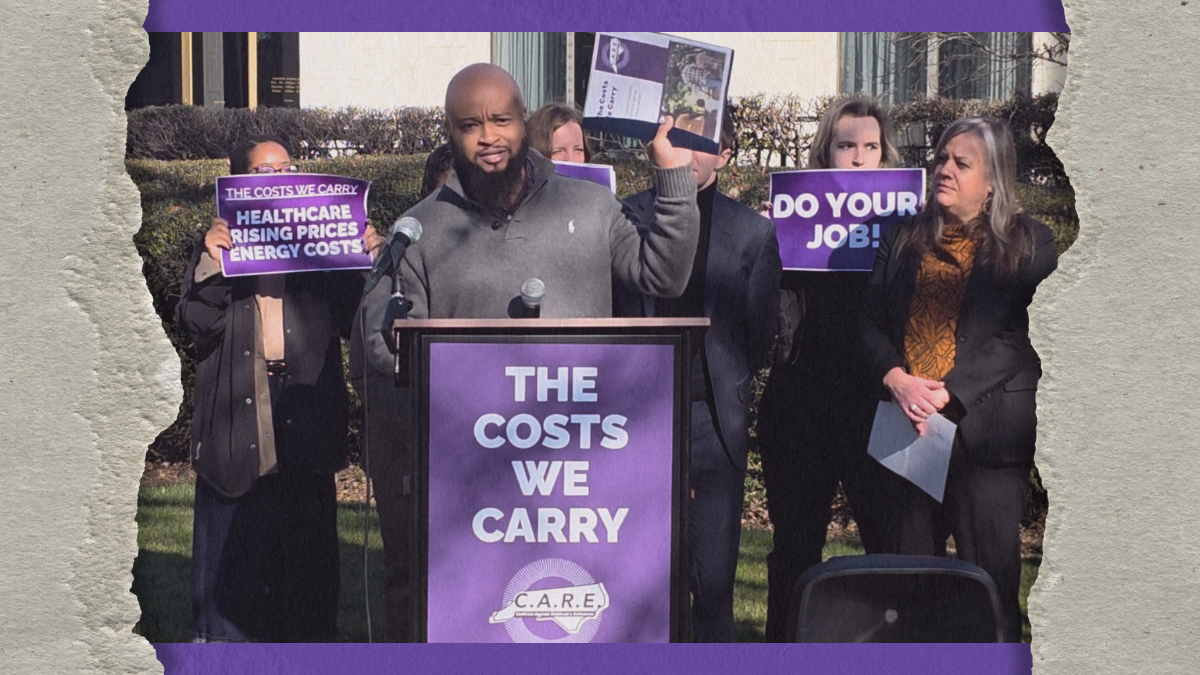
North Carolina advocates gathered Tuesday outside the General Assembly to launch The Cost We Carry Storybook, a new report highlighting nearly 100 firsthand accounts from residents struggling with the rising costs of health care, groceries, housing, and utilities — while Republican lawmakers continue to delay action.
The storybook, released by the Coalition Against Right-Wing Extremism (C.A.R.E.), comes as more than 200,000 North Carolinians lose health insurance coverage, Duke Energy customers face repeated electricity rate hikes, and small businesses grapple with higher costs driven by tariffs and federal inaction. Despite these mounting pressures, North Carolina remains the only state in the nation without a comprehensive state budget nearly two months into the new year.
“North Carolina is the only state in the nation that has not passed a comprehensive state budget, threatening crucial health programs and services that working North Carolinians and families rely on,” said Durrell Johnson, managing director at Progress NC Action. “While state Republicans continue to play political games and invest their time and energy into corporate greed, the people of North Carolina are hurting.”
According to the group’s press release, from October through December, C.A.R.E. invited residents across the state to share what they would tell lawmakers about the rising cost of living. Nearly 100 people responded, from Asheville to Wilmington.
During the press conference, Durrell Johnson shared one submission from an Alamance County resident who wrote, “Please don’t take away our Social Security and Medicare, we will die.”
Alexandra Forter Sirota, executive director of the NC Budget & Tax Center, said the stories reflect the real consequences of political decisions.
“Behind every data point is a person making an impossible choice,” Sirota said. “Refill a prescription — or pay the power bill? Buy groceries — or put gas in the car to get to work?”
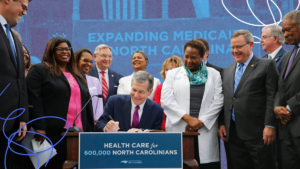
Sirota pointed to health care costs as a clear example of policy failure, noting that at least 200,000 North Carolinians have lost coverage as premiums spiked. “That didn’t happen by accident,” she said. “Policy choices in Washington — including letting Affordable Care Act premium tax credits expire and threatening Medicaid funding — directly raise costs for families.”
Utility costs were another major focus of the report. Ty McFarland, communications director at the North Carolina League of Conservation Voters, highlighted how state lawmakers have enabled Duke Energy to shift massive costs onto customers.
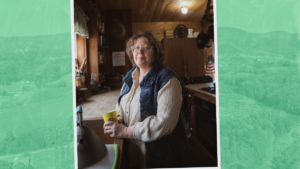
“My monthly Duke Energy bill has increased $60–70 a month despite all the efforts we do to lower our energy consumption,” said Pamela, a Union County resident featured in the storybook. “We see all these increases in our bills, and for what? So more ultra-wealthy corporations can get even richer?”
McFarland noted that a law passed last year allows Duke Energy to charge customers for power plants that haven’t even been built, a move projected to increase residential energy costs by more than $23 billion by 2050.
Food insecurity and housing costs also featured prominently in the stories. Families described stretching meals, relying on credit cards, and cutting back on necessities just to stay afloat.
“North Carolinians are doing their part,” McFarland said. “They’re working hard, cutting back, and making sacrifices. It’s time legislators do theirs.”
Advocates say The Cost We Carry Storybook is meant to force lawmakers to confront the human cost of their inaction. As Johnson put it, “This report is about making sure our state lawmakers hear directly from hard-working North Carolinians — and start serving people, not greedy corporations.”