Source: WRAL
North Carolina parents and educators are banding together to demand more resources and support for public schools. “Public School Strong” is an emerging group with over 500 members from various regions across the state. According to WRAL News, the group held a rally in Raleigh on Wednesday, November 15th. The parents and teachers marched and presented Superintendent of Public Instruction Catherine Truitt with their survey showing that most North Carolinians support public schools.
One of the key motivators for organizing Public School Strong was last year’s state legislative session, in which the GOP drafted and passed a seismic expansion of the state’s voucher system. WRAL News reports that the legislator “nearly doubled the funding for the voucher program, going from $133 million last year to $263.5 million this year. Next year, it will be $354.5 million. It would top $400 million the year after that and exceed $500 million a year by 2030, making it one of the largest line items in the state budget.”
Advocates from Public School Strong say this will decimate funding for public schools since nearly every student could take their tax-funded dollars to a private school. Joanna Pendleton, president of the Guilford County Association of Educators and a member of Public Schools Strong, told WRAL News, “Public money is getting siphoned off and sent to private schools, charter schools, just privatizers in general, who are not accountable in the same way that public schools are and who don’t serve all students the way that public schools do.”
In addition to there being no oversight for private institutions, the voucher program includes religious schools where there is discrimination against LGBTQ students or families.
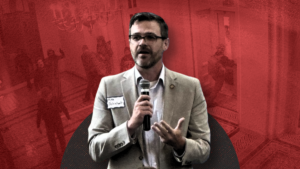
“We’ve done a lot of harm to public education in the past year,” said state Sen. Lisa Grafstein, D-Wake, who attended part of the Public Schools Strong rally. “It’s the [voucher] eligibility piece that is most significant, because it’s a misdirection of public dollars into private coffers.”
She added: “The voucher proponents talk about choice — we have choice in schools right now. We have all kinds of magnet programs. People can already send their kids to private schools. It’s just about who pays for it, and I don’t think the public should be paying for that.”
Public Schools Strong understands Superintendent Truitt cannot roll back the legislator’s harmful expanded voucher program. However, they are hoping she can convince the legislature to undo some of its dangerous decisions.
“We need Truitt and others to recognize the value in the public schools that are paid for by our tax dollars, and where the majority of our North Carolina students go to school,” Pendleton told WRAL News.
To find out more about Public School Strong and their fight to protect free and fair education for all North Carolinian students visit: https://www.healtogethernc.org/public-school-strong-nc