
Environmental groups and community partners collaborated this fall to produce the “People’s Tour,” an opportunity for Eastern North Carolinians to share their thoughts on various community environmental issues in a friendlier setting than public comment hearings can be.
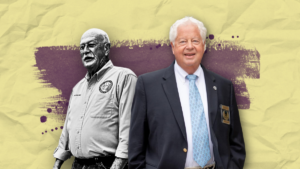
“The purpose of the People’s Tour was to give people the opportunity where they live to go on record and send it to the state as their formal statement,” said Rick Dove, senior adviser to Waterkeeper Alliance, and one of the organizers of the Tour.
“[Public comment] hearings start at six o’clock in the evening,” said Larry Baldwin, Dove’s chief collaborator and coordinator of North Carolina Pure Farms, Pure Waters. “If you’re two hours away, you’re not going to take the time to go.” In addition to the time and location of events, Baldwin said that people only have three minutes to share comments and often feel intimidated to speak.
The People’s Tour held several public sessions during a 10-day period in September, with stops in Gaston, Jacksonville, Warsaw, UNC-Pembroke, and Goldsboro, allowing local residents and representatives from environmental groups to come together to share their thoughts.
Belinda Joyner spoke about the air quality issues affecting her community at the People’s Tour stop in Gaston, which was attended by roughly 50 people.
“We’re impacted by hog farms and chicken farms,” Joyner said. “We pay taxes, but we’re not represented. Right now, I’m trying to figure out a way to hold [the Department of Environmental Quality] and [the Division of Air Quality] accountable because they allow these permits to come without the consideration of the people who have been impacted.”
Joyner was referring to the six draft general permits up for renewal this year under the Animal Feeding Operations General Permit process overseen by the NC DEQ. While the DEQ offers opportunity for public comment, these meetings often feature tense interactions and power dynamics that can make it difficult for impacted community members to speak up.
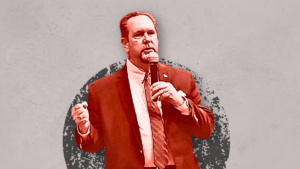
In fact, at the public comment meeting in Kenansville this fall, Republican State Rep. Jimmy Dixon, chair of the House Agriculture Committee, chastised the environmentalists who were there.
“You’ve got to be an idiot if you’ve been in the business for [30] years and you haven’t seen the changes that have taken place,” Dixon said in response to criticism about the pace of change.
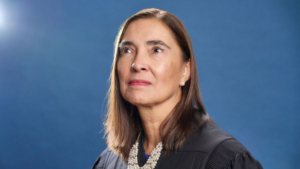
Riley Lewis, Coastal Carolina Riverwatch’s White Oak waterkeeper, noted that there is still a lot of work to be done to raise community participation. The Tour “really opened up [our] eyes to realize that we needed to do more education,” she said. “More outreach, to get the community more involved.”
Source: N.C. Health News