Source: WRAL
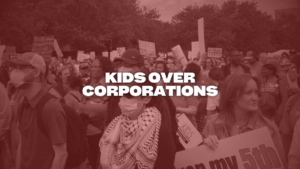
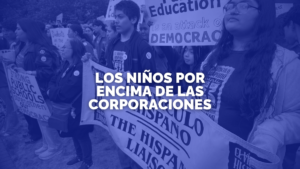
As North Carolina Republicans attempt to move an anti-education bill through the state legislature, parents, and educators are fighting back.
House Bill 187 seeks to censor educators from teaching about experiences and stories told across history, particularly from Black, Brown and LGBTQ+ voices.
State Democrats, parents, educators, and students have pushed back against the harmful measure, as it would deny North Carolina students of a quality education.
“The decision to erase Black voices and experiences in our public school classrooms, to censor our school curriculums and expunge the history of those who are “other,” is an absolutely chilling one,” wrote Kim Biondi, retired English and Language Arts teacher from Cabarrus County, in a recent editorial. “Legislation like House Bill 187 and Senate Bill 49 are examples of measures that will strip away opportunities for our students to be successful; for our students to be equipped with the tools to understand what’s happening in the world, how it impacts others around them, and how they can help foster change for a better future”.
State Republicans have attempted to pass similar legislation in the past that was vetoed by Gov. Roy Cooper.
Earlier this month, The Dudley Flood Center for Educational Equity and Opportunity, and the Public School Forum of North Carolina, issued a statement in opposition to the bill, stating:
“HB 187 would limit educators’ ability to discuss the reality of racism in the United States, would restrict students’ engagement with history and current events, and would hinder districts’ efforts to understand and tackle the root cause of inequities in our schools,” the statement read. “We must ask — what problem is actually being solved through this legislation? How does this legislation promote equality when it inherently discriminates against certain groups or topics? The only way to truly achieve equality is to bravely and honestly reckon with our country’s complicated past and present.”
According to PEN America, 50 educational censorship measures have been introduced in 16 different states so far this year, with 34 focused only on K-12 schools, 4 focused only on colleges and universities, and 12 that would target both.
“Effacing stories of Black and Brown voices and experiences also eradicates real American history….Public schools exist to foster critical thinking and honest debate. Their curriculum should reflect their student population and include all of our voices, all of our experiences, all of our perspectives,” wrote Biondi. “Silencing some voices for the comfort of extremists diminishes everyone.”
Read more at The News & Observer