BEACON MEDIA GUEST FEATURE
By Kimberly Jones
Former teacher of the year Kimberly Jones, once a rural area public school student, says state lawmakers should offer the same opportunities to rural students that are offered to those from wealthier areas.
Originally published on Beacon Media.
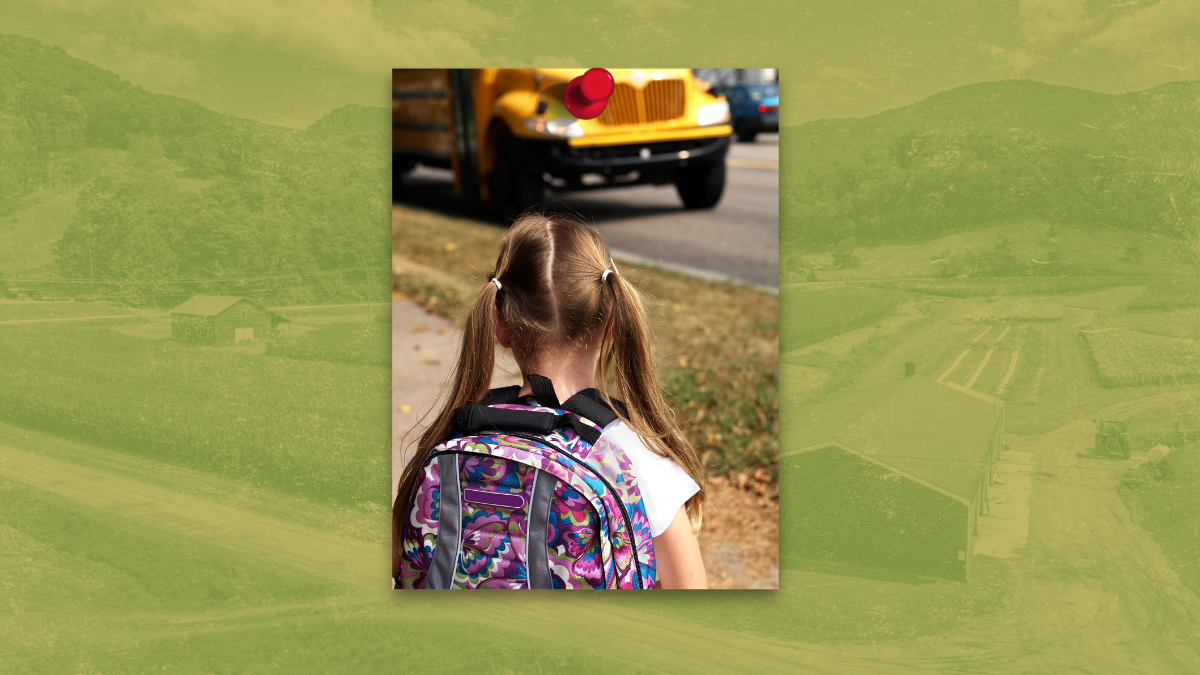
I grew up in Harnett County, N.C. Rural roads. Tight-knit communities. Public schools that did everything they could with what they had.
My teachers knew my family. They pushed me, believed in me, and opened doors that my circumstances alone might not have opened.
But even with such phenomenal educators, my classmates and I understood that our opportunities were not the same as students in wealthier districts, with fewer Advanced Placement courses or career training options.
We did not lack talent or ambition. We lacked access.
Today, I teach in Chapel Hill-Carrboro City Schools, one of the most well-resourced districts in our state, with its wealthy tax base and supplements above and beyond what is allocated by the state.
Students in my district have access to over 20 Advanced Placement and nearly a dozen Career and Technical Education (CTE) pathways. Every day, I am reminded of what is possible when schools have the funding, staffing, and stability students deserve.
I am also reminded of the uncomfortable truth that where a child lives in North Carolina still shapes what opportunities they receive. Too often, rural students are the ones asked to make do with less.
This is not accidental. It is the result of policy choices.
Through my work with the Rural Teacher Leadership Network, a program facilitated by the Dudley Flood Center for Educational Equity and Opportunity, I lead Eastern NC rural educators in improving their practice. These teachers are innovative, resilient, and deeply committed to their students and communities.
Their rural schools are not struggling because of a lack of passion or talent. The reason they are struggling is a lack of resources.
North Carolina ranks 48th nationally in per-student funding and 49th in funding effort, the measure of how much a state or district invests in K-12 public schools relative to its overall economic capacity. North Carolina, a growing state with thriving areas of our economy, invests roughly $5,600 less in public education relative to its capacity than nearly every other state.
Wealthier counties can compensate through local tax revenue that funds modern facilities, competitive salaries and expanded programs. When the state underfunds public education, rural students feel it first and feel it most — and our rural schools have nowhere else to turn.
This is exactly why the so-called Leandro state Supreme Court case exists. In 1994, five low-wealth rural counties went to court because their students were being denied access to the sound, basic education guaranteed by our state constitution. The North Carolina Supreme Court agreed.
Every child, regardless of zip code, has the constitutional right to a sound, basic education, the court found.
That right requires well-trained teachers, strong leadership, and sufficient resources. Yet decades later, the state still has not fully met that obligation.
Instead, North Carolina is dramatically expanding private school vouchers, with more than $575 million allocated this year and billions projected over the next decade, instead of funding for public schools. In many rural counties, there are few, if any, private schools.
Just 17% of our state’s private schools, which are often religious and exclusive, exist in rural areas and remote towns, according to a 2025 Learning Policy Institute study.
This is the part that is hardest to understand: Many of the lawmakers who support voucher expansion represent rural communities. They know these schools. They attended them. Their families still rely on them.
Yet their votes are weakening the very institutions that serve as the backbone of their communities.
Public schools in rural communities are more than educational institutions. They are community centers and large employers. They are gathering places on Friday nights and sources of pride year-round. When a rural school struggles, the entire community feels it.
I am the product of rural public schools. Without those teachers, those classrooms, and those opportunities, I would not be where I am today. Rural students today deserve the same investment.
The plan experts came up with to solve this disparity in the Leandro case provides a roadmap. It calls for a well-trained teacher in every classroom, a strong principal in every school, and equitable funding so every child has access to opportunity. This is not a political wish list. It is a constitutional mandate.
The question before our lawmakers is simple. Will they invest in the rural students they represent, or will they continue to divert resources away from them?
Rural students do not need sympathy. They need commitment. They need leaders willing to fund their future, not undermine it. I know what rural schools can do when they are supported.
I am living proof.Kimberly Jones is a high school English and Humanities teacher. She was the 2023 Burroughs Wellcome Fund North Carolina Teacher of the Year. All content published by Beacon Media is available to be republished for free on all platforms under Beacon Media’s guidelines.