Editorial Board
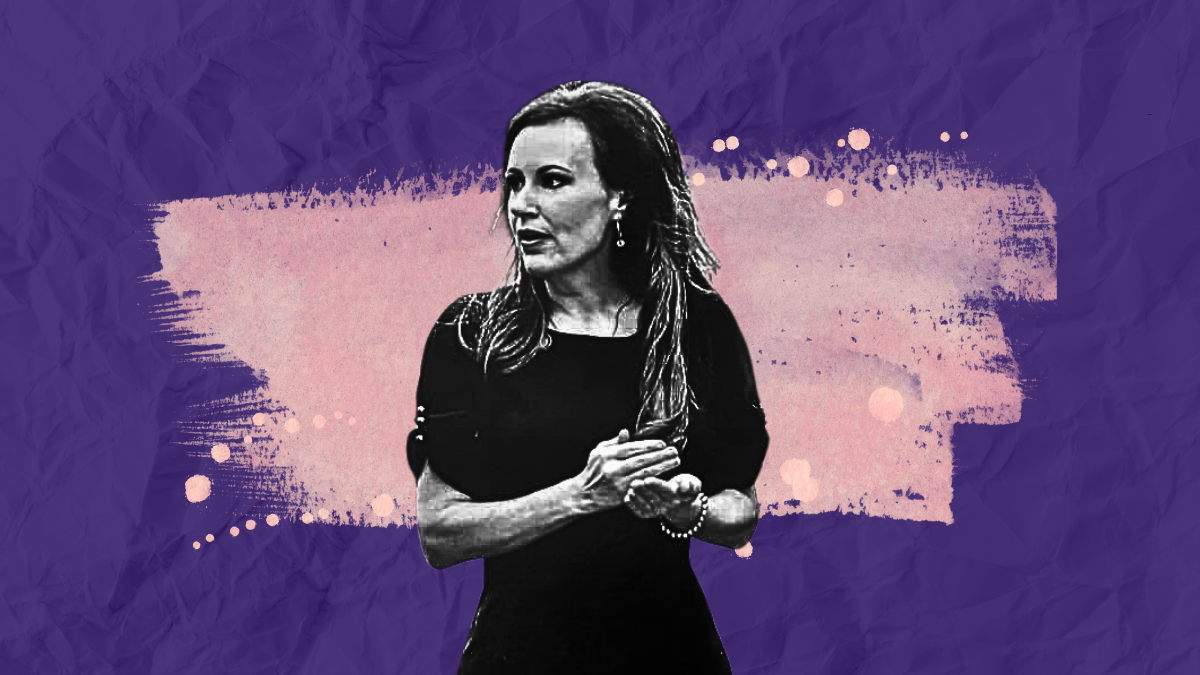
It was politics at its worst. Tricia Cotham, whose constituents elected her as a Democrat on her platform to raise the minimum wage, protect voting rights, and support abortion, switched her party affiliation to Republican in April 2023 with threadbare justification that unnamed Democrats were mean to her.
Cotham’s party switch gave Republicans a supermajority in the North Carolina General Assembly and allowed them to override a series of then-Governor Cooper’s vetoes. Cotham’s votes enabled a sweeping abortion ban with harsh new restrictions, changes to election laws, a reduction in the powers of the governor, and more money taken out of North Carolina’s public schools, among others.
Cotham’s vote for the abortion ban was particularly shocking after her years of vocal support for abortion rights, including a 2015 speech where she discussed her own abortion and decried Republicans taking away women’s rights.
Cotham’s about-face on her core values did not go unrewarded. Cotham’s fellow Republicans – in charge of redistricting – redrew her legislative district to ensure it had as many conservative voters as possible, in an area that’s otherwise trending leftward. And it paid off. Cotham managed to eke out a victory in 2024 by just over 200 votes out of over 50,000 cast.
Now she is running for re-election again, after spending the last two years blindly doing the bidding of corporations and special interests rather than anything to help lower the cost of living. Notably, Cotham voted to cut $500 million from public schools, to allow Duke Energy to raise electricity rates even higher, to cap the income tax on billionaires at a historically low rate, and to cut millions from health care.
Cotham even championed raising the local sales tax in Mecklenburg County. Cotham was the primary sponsor of the P.A.V.E. Act in 2025, which established a new 1% sales tax rate increase to fund local transit.
However, Cotham’s district in southeast Mecklenburg County largely voted against the sales tax increase, including strong opposition from the town of Matthews.
Objections of community members pointed out the initiative’s disproportionate impact on low-income taxpayers and the threat of displacement for those communities who currently live near transportation-related development. Matthews town leaders also highlighted the unequal distribution of benefits, given that the proposed commuter line would no longer serve their community.
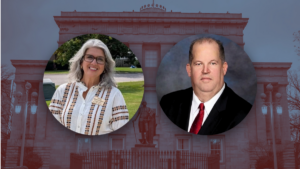
The contrast couldn’t be clearer between Cotham and her opponent this cycle, small business owner and Matthews Town Commissioner Ken McCool.
During his time as Matthews Town Commissioner, McCool pushed back against Cotham’s brazen sales tax, calling out the lack of transparency and input from residents.
“How many public meetings have they hosted when they decided they wanted to change it to bus rapid transit? Zero. Not a single constituent has been heard,” stated McCool following a vote on the sales tax in 2024.
McCool has remained focused on expanding housing options, improving public safety, creating jobs, and securing the biggest investment in town parks in decades. He says prices for gas, food, utilities, housing, and healthcare are out of control, and Raleigh is failing to help North Carolinians. He’ll stand up to the extremists on both sides and fight for common-sense policies focused on lower costs, better schools, and safer neighborhoods.