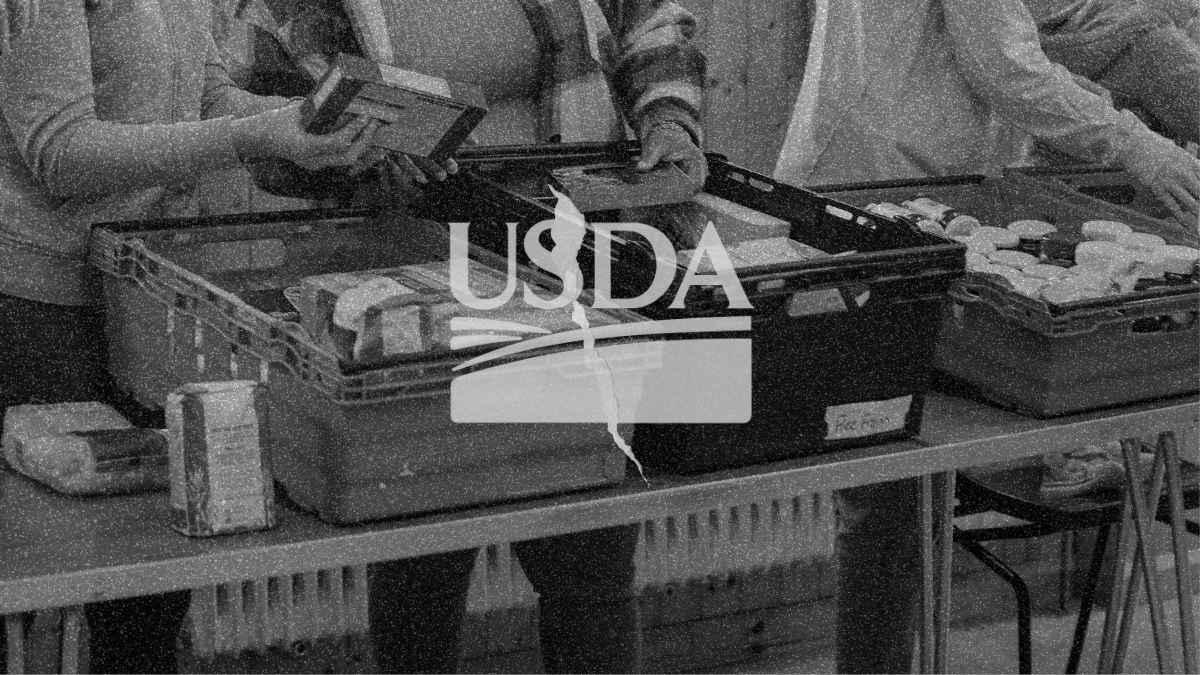
Last week, the Trump administration announced that it is taking away millions of dollars from programs that help schools, childcare facilities, and food banks in North Carolina.
Since 2022, North Carolina has participated in several federally funded programs, including the Local Food for Schools Cooperative Agreement Program. ABC 11 reports that the state was set to receive $18,975,621 for the 2025-2026 fiscal year from the USDA to provide fresh, healthy meals to students.
According to WUNC, the Food Bank of Central and Eastern North Carolina is one of seven food banks that receives funding through another federal program, called the Local Food Purchase Assistance Program, which is housed under the United States Department of Agriculture.
A letter from the United States Department of Agriculture informed state officials that the nearly $19 million that they would receive from these federal programs would be cut beginning the next fiscal year.
“We’re thinking about what is that indirect impact that children will not be getting at schools and what we may need to provide in place of that,” said Amy Beros, the CEO of the Food Bank of Central and Eastern North Carolina.
Beros told WUNC that the $2 million in federal funds they would’ve received would go to farmers.
“These are our farmers,” Beros told WUNC. “These are neighbors across our counties that are in need, and this is going to be a huge impact economically.”
Trump’s cuts also come as many farms are recovering from Hurricane Helene, which caused an estimated $4 billion in damages to the state’s agricultural sector.
“Losing this support is devastating, not merely because of the financial setback, but because it directly affects an essential lifeline connecting agriculture, regional economic well-being, and the health of WNC families,” Claire Neal, CEO of MANNA FoodBank, told Asheville Citizen-Times.