The North Carolina State Board of Elections’ recent decision to stop providing free, bulk voter registration forms to organizations has ignited a debate over cost, access, and legal obligations.
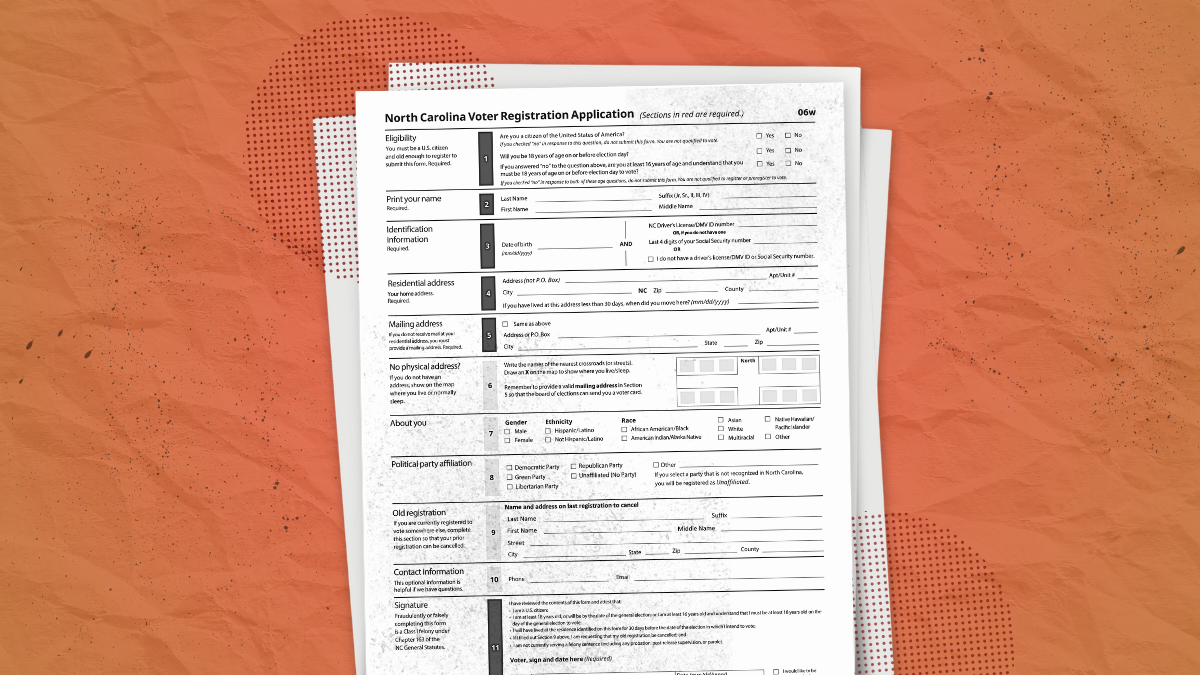
In late February, the North Carolina State Board of Elections informed county boards that it would no longer supply physical voter registration forms in bulk to groups conducting voter registration drives. Once existing supplies are exhausted, organizations such as the League of Women Voters, You Can Vote, and Democracy North Carolina will need to print their own materials. The policy does not affect individuals, who can still obtain forms through county boards or directly from the state.
North Carolina State Board of Elections Executive Director Sam Hayes framed the decision as a practical response to rising costs. In 2024 alone, the state printed nearly 1.3 million registration forms for distribution to organizations and government agencies, at a cost exceeding $269,000. Hayes claimed the expense was difficult to justify, given that forms are readily available online and many organizations already have the resources to print them.
However, there’s context to that $269,000 figure, as during the 2024 election cycle, new parties were added and removed, changing the form multiple times, and it was a major presidential year.
“We do live in the information age,” Hayes said, emphasizing that groups conducting registration are capable of managing their own printing needs. An email from the State board to county boards echoed that sentiment, noting that printed forms “were never intended to be in endless supply.”
Still, voting rights advocates argue the shift could significantly hinder voter registration efforts, particularly among smaller organizations and underserved communities. While larger groups like the League of Women Voters of North Carolina say they can absorb the added costs, albeit with tighter budgets, others may struggle.
Printing voter registration forms is not trivial, advocates say. The forms are typically double-sided, printed on heavier paper, and use color to highlight required fields.
According to You Can Vote Executive Director Kate Fellman, producing a compliant form could cost up to $1.50 per copy. Even if black-and-white versions are accepted, the cumulative expense of printing hundreds or thousands of forms could quickly become prohibitive.
Critics warn that the policy may disproportionately affect rural voters, elderly residents, and people without access to a North Carolina driver’s license, groups that often rely on in-person registration drives. Online registration, while available through the DMV, is widely described by advocates as cumbersome and inaccessible for some populations, especially when conducted on mobile devices in the field.
“Paper forms are just the gold standard, and always have been for voter registration in North Carolina,” Fellman said, pointing to gaps in digital access and usability.
Some activists also question the timing of the decision. It follows a costly effort by the State Board to address missing identification information for hundreds of thousands of registered voters. As part of a settlement with the U.S. Department of Justice, the board launched a “Registration Repair Project,” mailing notices to more than 100,000 voters whose records lacked required identification numbers due to earlier issues with the registration form. Separately, another 241,000 voters received similar notices, even though many registered before such identification was required.
While Hayes defended those mailings as necessary, critics argue the juxtaposition raises concerns about priorities. Some have questioned whether the costs associated with those efforts contributed to the decision to halt free-form distribution.
The legal implications of the decision remain unsettled. Voting rights groups argue that limiting access to bulk registration forms may violate the National Voter Registration Act (NVRA), which requires states to make forms available for distribution, with particular emphasis on organized voter registration programs. Legal experts say that if the cost burden effectively prevents organizations from conducting drives, the policy could conflict with federal law.
State officials maintain they are in compliance, noting that forms remain accessible online and through county election offices.
The move also comes amid a broader political context. Earlier in 2025, some Republican lawmakers backed House Bill 127, legislation that would have criminalized private voter registration drives, though the proposal was shelved after critics pointed out that it violated federal law. For some advocates, the new policy raises similar concerns through indirect means.
“It’s literally just passing the buck,” said Melissa Price Kromm of North Carolina For The People, who worries that both community organizations and smaller county boards may now struggle to meet demand.
As North Carolina heads toward a competitive 2026 election cycle, the outcome of this policy shift may have far-reaching consequences.