BEACON MEDIA GUEST FEATURE
The farmworkers who legally come to make North Carolina’s farms function are overworked, underpaid, and endure brutal conditions. Will lawmakers recognize them?
This editorial was originally published on Beacon Media.
By Joaquin Villagran-Hernandez
The volleyball net was tied to two wooden posts with baling twine, and the ball was half-flat — but none of that mattered to me.
For an hour, the crew of farmworkers I’d come to visit with Student Action with Farmworkers forgot about the heat and the 12-hour days topping tobacco plants ahead of them. One man played in work boots and a pair of shorts printed with the American flag. He spiked, he laughed, he argued a call at the line.
Together, we found joy, not hardship, in a place built to ensure no one ever sees either.
Most of us will never see one of North Carolina’s more than 1,000 farmworker camps, let alone meet the people who live in them. A study of labor camps in eastern North Carolina found that more than a third were hidden, deliberately set back from the road, tucked behind tree lines, or built where no paved road reaches them.
Health workers, legal aid attorneys, and outreach teams like the one I worked on as part of an internship this past summer, often search for camps the way you’d search for something someone doesn’t want found. For the men and women who live there, this means no visitors, no neighbors, no one who would notice if something went wrong.
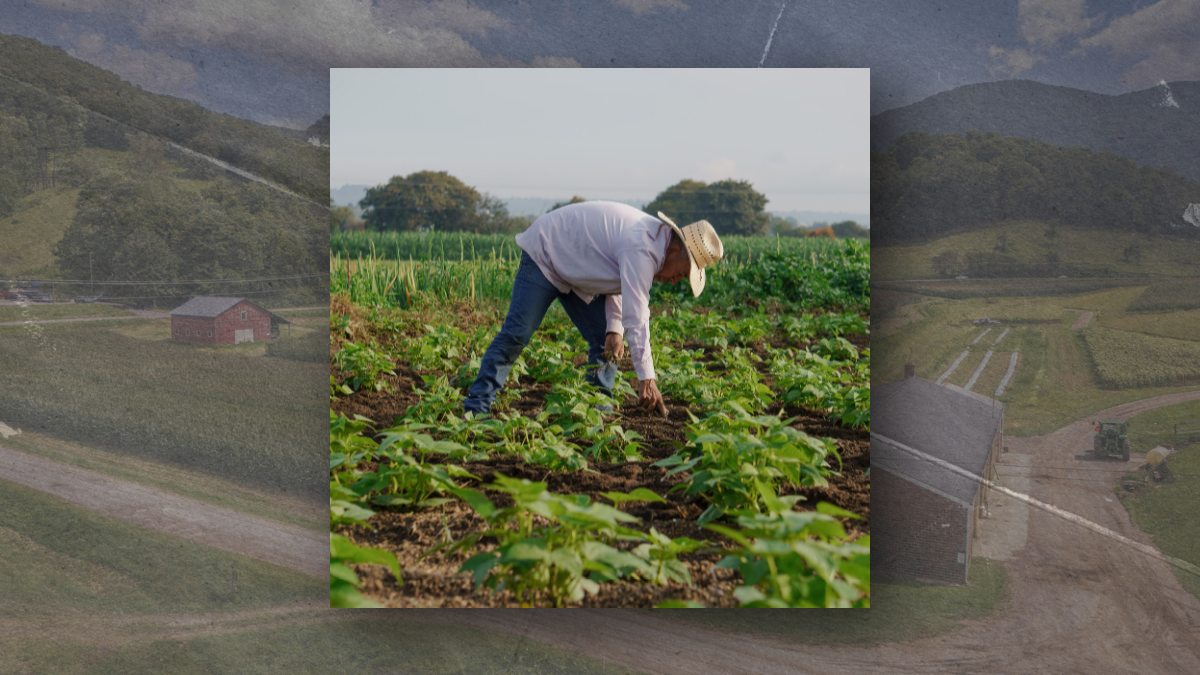
These are workers who enter the United States legally to work on farms as part of the H-2A temporary agricultural worker program. Each year, thousands of H-2A workers travel to North Carolina to harvest tobacco, sweet potatoes, cucumbers, and other crops. They are key to sustaining the state’s multibillion-dollar agriculture industry. They return for seasonal work year after year, leaving behind spouses, children, parents, and communities, living for months in isolated labor camps.
In 2024, José Arturo González Mendoza, 30, died in the heat at Barnes Farming in Nash County. While an autopsy later cast doubt on whether the heat was totally to blame for Mendoza’s death, it exposed the conditions the farmworkers endured, including not being given cups to easily drink water, according to the News & Observer.
As one worker said to me after our volleyball game, “Aunque estoy en el país más libre, no soy libre.” Even though I am in the freest country, I am not free.
He said it quietly, as if he were stating a simple fact. I found his words difficult to reconcile. How can someone in the country, so often described as the land of the free, still feel that freedom remains out of reach?
Isolation is not the only difficulty these workers face. Wages that were already thin have gotten thinner: a recent federal wage rule cuts what NC farmworkers are guaranteed to earn, and workers feel it. “El sueño americano está muerto,” one man said to me. The American Dream is dead.
Another put it this way: “Uno no gana aquí, ni en México.” You don’t win here, nor in Mexico.
Yet they continue to come.
Not because America is perfect. Not because the work is easy. But because they still believe there is dignity in building a better life.
The more of these workers I met, the more I wished state and federal lawmakers could hear their stories. Temporary farmworkers aren’t voters, but they are still constituents. Farmworkers live in lawmakers’ districts. They work in their districts. They spend their wages in their districts’ grocery stores. They pick the crops that carry entire county economies and feed the state and the country.
But because they can’t vote, they’re treated as if they don’t count.
Farmworkers deserve a seat at that table, even a small one: a listening session, a staffer who visits a camp instead of reading a memo about one, a policy process that asks workers what they need before deciding what they get.
In the labor camps of eastern North Carolina, what you see is not just hardship; it’s how much some of these men and women still want from this country, and how little of it we let them have. Workers who’ve spent 30 years bent over in North Carolina fields still ask, quietly, if there’s somewhere they can learn English. Not because anyone requires it, but because they want it for themselves.
They’ve given years of their lives to American agriculture, and in return we’ve given them an even lower federal wage, a housing law that says outhouses are acceptable, and a state that mostly doesn’t know they’re here.
Now I understand what that worker meant when he said he wasn’t free. They work here. They live here. They contribute here. Yet they remain unseen.
North Carolina’s farmworkers need lawmakers willing to see them as neighbors already living, working, and hoping for something better.
Joaquin Villagran-Hernandez, a Student Action with Farmworkers intern with the North Carolina Justice Center, is a first-generation Mexican American raised in Greene County, N.C. This column is syndicated by Beacon Media and is available to republish for free on all platforms under Beacon Media’s guidelines.