Guest Editorial
Terence Everitt
Executive Director, NC Voter Protection Alliance
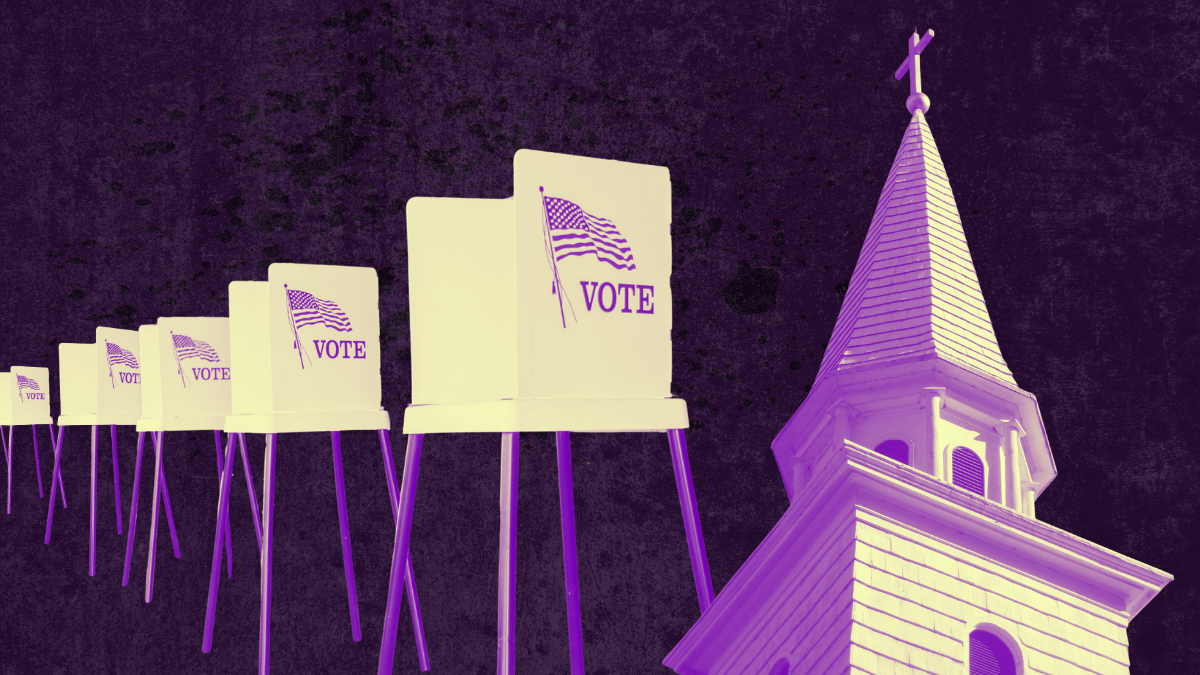
Religion was invoked repeatedly during the North Carolina State Board of Elections meeting as a reason to eliminate Sunday voting.
A Republican member of the Anson County Board of Elections offered the most explicit argument. He objected to requiring people to work on the “Lord’s Day” and warned that “the downfall of this country will be contingent on what we do with God.”
He also criticized companies that employ people on Sundays:
“I like how Chick-fil-A has done it, and I wish more companies would do that.”
But this is an election, sir, not a Chick-fil-A.
Chick-fil-A is a private company. It can choose to close on Sundays. Election officials exercise government power. They have a responsibility to serve every eligible voter, not impose their own religious practices on the public.
State Board member Stacy “Four” Eggers IV likewise described Sunday as “a day of rest” and “an important time for family for those who observe religious activities.” Other Republican county board members reportedly argued that Sunday should be reserved for “church and family.”
But Sunday voting does not prevent anyone from attending church, spending time with family, or observing a day of rest. It simply gives other people the opportunity to vote.
For many Black churches, voting on Sunday is itself a religious and civic tradition. “Souls to the Polls” brings congregants from worship services to early voting sites. It combines faith, community and democratic participation.
Eliminating Sunday voting does not protect religious practice. It elevates one expression of religion while obstructing another.
It also ignores the three in ten North Carolina adults who are not Christian, along with those who observe a different Sabbath or none at all. Some faith traditions observe Saturday as their holy day. Many North Carolinians work long or irregular hours. Others have caregiving responsibilities, limited transportation or other circumstances that make Sunday their best opportunity to cast a ballot.
Government should not decide that one official’s preferred day of rest matters more than another citizen’s opportunity to vote.
More fundamentally, using Christianity to justify restricting access to the ballot turns Christian teaching on its head. And honestly, I’m tired of watching some of my friends on the other side of the aisle use Christianity as an excuse to indulge their most craven political instincts.
Scripture teaches that every person is created in the image of God. Even our political opponents. It commands us to love our neighbors, pursue justice, reject partiality, and speak for those whose voices are too often ignored. It warns those in authority against using power for their own benefit and imposing burdens on others that they would not bear themselves.
Voter suppression violates each of those principles.
When election officials manipulate voting rules based on which communities are most likely to use a particular day or polling place, they are not treating every person with equal dignity. They are deciding that some voices are politically undesirable and then using government power to make those voices harder to hear.
Obviously, Sunday voting is not required in every county under every circumstance. Election officials may legitimately consider staffing, cost, and demonstrated public need. But those considerations must be evaluated honestly and applied consistently.
Religion cannot become a convenient excuse for eliminating voting opportunities disproportionately used by Black voters, particularly when the same officials show far less concern about Saturday voting burdening people who observe Saturday as the Sabbath.
The clearest Christian principle here is also the simplest: Love your neighbor as yourself.
If we want our own voices heard, we should defend our neighbors’ right to be heard. If we value convenient access for ourselves, we should not create unnecessary obstacles for others. And if we believe government power is a public trust, we should never use it to determine which citizens receive a meaningful opportunity to participate.
You cannot claim to love your neighbor while deliberately making it harder for that neighbor to be heard.
Christianity should never be used as a pretext for voter suppression. Its teachings call us toward precisely the opposite: equal dignity, impartial justice, and a government that serves every voter, not merely those whose votes the people in power would prefer to count.