
Editorial Board
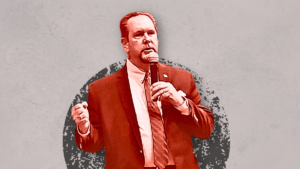
The race for North Carolina Senate District 4 is shaping up as a contest between Republican incumbent Buck Newton’s years of legislative experience and Democratic challenger Jess Rivera’s background in military service, small-business ownership, and community involvement.
The candidates will face off in the Nov. 3, 2026, general election for a seat representing Greene, Wayne, and Wilson counties. Newton, a Wilson attorney serving his fifth Senate term, is seeking another term in office, while Rivera, a Marine Corps veteran who has been deployed twice and a Wilson business owner, is campaigning on a platform centered on public education, rural health care, working families, and government accountability.
One issue distinguishing Rivera’s platform is her opposition to what she describes as the harmful effects of large data-center developments. Her campaign calls for mandatory moratoriums on data centers and argues that new projects should be subject to rigorous standards to protect residents and the environment. Data centers have become a hot topic, as they create issues around electricity demand, water use, and infrastructure costs.
Public education is one of the key areas of emphasis in Rivera’s campaign. She supports increased investment in rural schools, improved teacher compensation, and stronger community-college programs that connect students with employment opportunities close to home.
Newton lists education among his priorities as well. His record as a legislator and committee chairman provides a basis for voters to examine his approach to school funding, education policy, and state budget decisions.
Notable public education legislation that Newton has supported includes House Bill 10, passed in 2024. While the bill dealt with immigration enforcement, it also included the expansion of the private school voucher program in the state. Legislators had originally introduced private school voucher expansion in another bill, but folded the policies into House Bill 10 after negotiations stalled.
In expanding private school vouchers, legislators diverted money meant to fund public schools into the voucher program. House Bill 10 alone took $479,058 in funding from Greene County public schools, $4,255,630 from Wayne County public schools, and $2,499,085 from Wilson County public schools. Newton voted in favor of the bill, and the public schools in his district lost over $7 million in funding.
Health care is another issue with local implications. Rivera advocates protecting rural hospitals and clinics and expanding access to mental health and substance-use services. Her platform emphasizes keeping care accessible to residents who may otherwise have to travel farther for treatment.
Economic opportunity is central to the race, particularly in a district where agriculture, small businesses, and local employers play important roles. North Carolina residents, like the rest of the country, are facing a cost of living crisis due to the Iran war driving up the price of gas and groceries, in addition to tariffs.
Rivera supports job training tied to local employers, fair wages, small-business development, and infrastructure improvements intended to help rural communities attract and retain investment. Her campaign also calls for fair crop insurance, improved water access during droughts, and additional support for family farms.
Her experience running a business in Wilson gives her a direct connection to the daily demands of operating a local enterprise. Her campaign argues that economic development should benefit workers and communities rather than concentrate gains among large corporations.
The North Carolina General Assembly recently reconvened to attempt to address the rising cost of living; they voted to suspend the gas tax in the state until December 1st. While Newton supported the gas tax suspension, he acknowledged that he didn’t really know how much it would help with rising costs.
Additionally, Newton supported Senate Bill 266, which allowed Duke Energy to raise rates for customers at a time when it is pulling in record profits. From 2020 to 2025, Duke Energy raised rates so much that customers using the same amount of power every month were paying 45% more than they paid for the same power in 2020.
Newton also blocked relief from property taxes and rising homeowner’s insurance premiums when he voted to table amendments from Senate Democrats addressing those issues. Newton also voted against an amendment that would have provided tax credits for small businesses specifically to offset rising costs due to tariffs.
Newton recently campaigned with Michael Whatley, the Republican nominee for North Carolina’s open US Senate seat. Whatley’s campaign has been under fire for months over Whatley’s appointment of Harvey West Jr., a known convicted child molester, to a position of power within the NCGOP when Whatley was still NCGOP Chair.
What has received less attention is that Buck Newton once received a campaign contribution from Harvey West Jr. and has been pictured at multiple events where West was campaigning to keep his most recent position within the NCGOP.
Early voting began on Thursday, October 15th and ends at 3 pm on Saturday, October 31st. You can still register or update your voter registration during the early voting period.
Election Day is November 3rd.