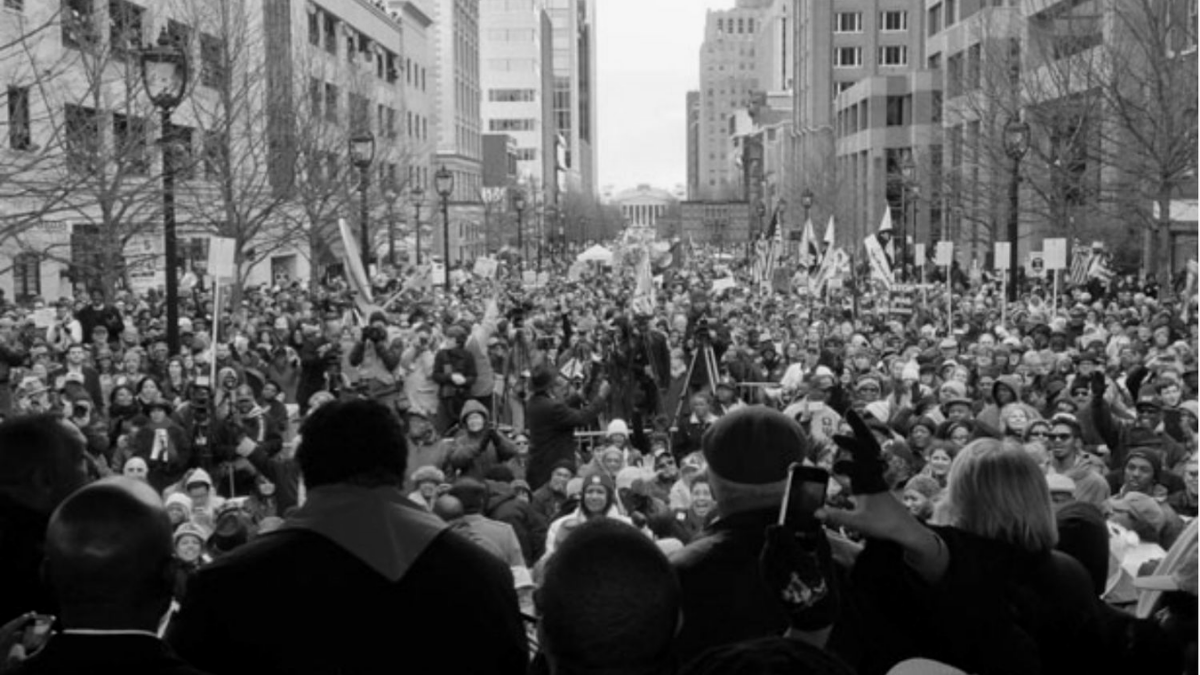
Last month signaled the return of Moral Mondays, as faith leaders, advocates and community members came together in Raleigh to demand for policies that center poor and low-wealth North Carolinians.
The Moral Monday revival is part of a national mobilization tour leading up to a major march in the nation’s capital on June 18, the “Mass Poor People’s and Low-Wage Workers’ Assembly and Moral March on Washington and To the Polls”.
The mobilization tour will make 12 stops nationwide to “Mobilize, Organize, Register and Educate”, according to The Poor People’s Campaign.
“We’re mobilizing the people..we’re mobilizing from the mountains of North Carolina to the sand hills of North Carolina. We’re mobilizing in the city and the rural..From Appalachia to Alabama. We’re mobilizing with Kansas farmer and fast food worker. From upstate New York all the way to the tenderloin in San Francisco,” stated Rev. Dr. William J. Barber II.
Barber led the first Moral Monday in 2013, demonstrating against state Republican-led regressive legislation towards education, Medicaid expansion, voting and labor rights.
Since then, Barber and the Poor People’s Campaign have put forth a Third Reconstruction agenda that demands updating the poverty measure to reflect the real cost of living; enact a living wage and guarantee the right of all workers to form and join unions and guarantee quality health care for all, according to a press release.
Find out more about The Mass Poor People’s & Low-Wage Workers’ Assembly & Moral March on Washington and to the Polls, and how to attend here.