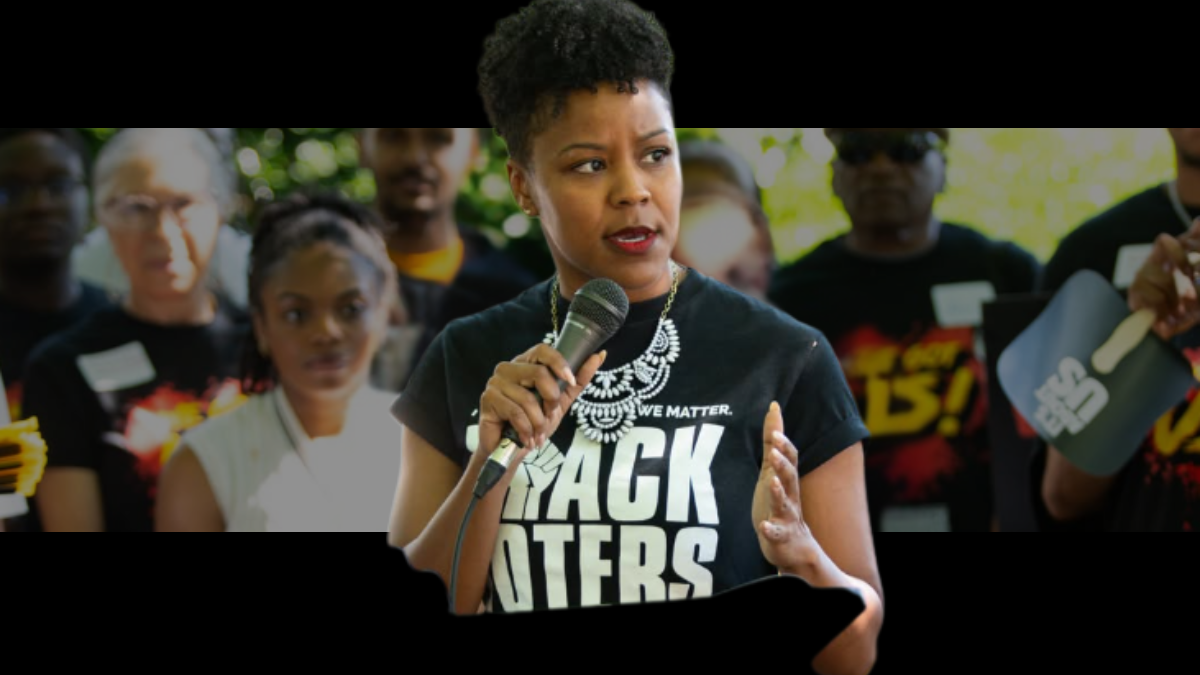
The fight for fair maps is far from over as we continue to face relentless voter suppression tactics that target Black and Brown voters. From the recent Callais decision to the elimination of crucial voting sites at historically Black colleges and universities, voting rights are a hot-button issue.
Recently, the Republican-led U.S. Supreme Court gutted Section 2 of the Voting Rights Act, the law that guaranteed the right to vote for every American and protected the votes of Black and Brown voters, through the Louisiana v. Callais decision.
The Supreme Court’s decision on the case means that race can no longer be used as a basis for redrawing district lines despite past rulings stating that race should be taken into consideration. The Louisiana v. Callais ruling harms Black and Brown voters in a state where Republicans redraw maps to cast out marginalized people’s voices to maintain power. And North Carolina has a long history of voter suppression targeting Black and Brown communities.
Just this year, the Republican-led State Board of Elections rejected Sunday voting and on-campus voting sites at various HBCUs, such as A&T State University and Western Carolina University. Back in October, our state’s Republican-led legislature decided to redraw congressional maps in favor of the GOP and to deliberately flip the seat of Democratic Rep. Don Davis, who represents a historically Black district.
“Many have made the assumption that we are now far removed from the grip of Jim Crow. However, I would like to humbly submit to you today that the era never ended for our communities. It’s just being spearheaded by the children and the grandchildren,” said Dr. Jovita Lee Miller, policy director for Advance North Carolina, told NC Newsline.
Although a lengthy and tedious fight, North Carolinians must stand together and raise awareness about threats to our voting freedoms. North Carolina is still the only state in the country without a comprehensive budget passed due to Republicans in the General Assembly prioritizing redrawing congressional maps to disenfranchise marginalized voters over the real needs of the people.
November will be here before we know it, and with issues on the table such as skyrocketing utility bills, high grocery prices, etc., we must take a critical look at the way Republicans are trying to maintain power by weakening the power of the electorate and the serious consequences of racial gerrymandering.