Source: Editorial Board
North Carolina’s delegation in the next session of the U.S. House of Representatives will consist of seven Democrats and seven Republicans, a fitting split for such a politically “purple” state.
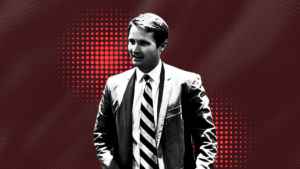
One of those seven Democrats is Wiley Nickel, who won his race for the newly re-drawn 13th Congressional District against MAGA extremist Bo Hines. The 13th District, in its old form, is currently represented by U.S. senator-elect Ted Budd.
The Nickel-Hines race was one of the most expensive in the state. Both pollsters and journalists expected it to be the closest race in the country and a mirror of how races in the rest of the U.S. would go.
Nickel, a two-term state Senator, criminal defense attorney, and former White House staffer under President Barack Obama, beat Hines by 2.64%. Although the race was close, it wasn’t as close as many expected and didn’t indicate any sort of “red wave” that some prognosticators and Republicans had believed was coming.
Nickel previously ran for state Senate, saying that it was “time for a progressive agenda in the North Carolina General Assembly.”
When Nickel ran for the state Senate in 2018, he was part of former President Barack Obama’s first wave of endorsements. He was endorsed by multiple organizations in his 2022 House run, including groups like The League of Conservation Voters (LCV) Action Fund, NARAL Pro-Choice America, North Carolina Asian Americans Together Action, Jewish Democratic Council of America and Equality NC PAC. He also received positive coverage from Rolling Stone magazine and was endorsed by The News & Observer.
Nickel has gained a reputation for fighting for progressive ideals in the General Assembly and will continue to do so in Congress.