
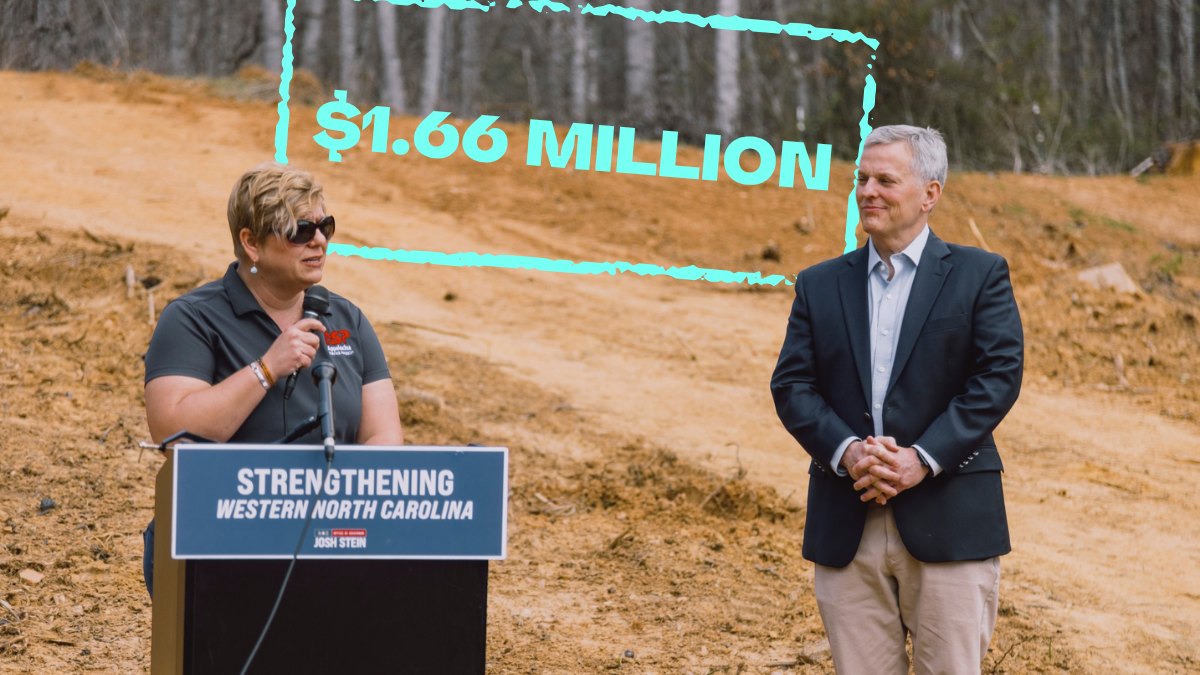
Earlier this month, North Carolina Governor Josh Stein announced that North Carolina’s Rural Infrastructure Authority (RIA) approved seven grants totaling $1,657,500 for local governments in Anson, Cherokee, Gaston, Henderson, Robeson, Rockingham, and Stanly counties.
The grants will support infrastructure development and site improvements, as well as building renovation, expansion, and demolition, and are expected to create 215 jobs. The funding aims to boost economic growth and opportunity in North Carolina’s smaller towns and rural areas.
“North Carolina has the second-largest rural population in America,” said N.C. Commerce Secretary Lee Lilley. “These grants are critical to strengthening the economic competitiveness of our state.”
The grant funding is expected to be coupled with approximately $41 million in additional public and private funding. For example, in Gaston County, a $187,500 grant will support the expansion of a building occupied by DePalo Foods. The project will create 30 jobs and $8,352,276 of private investment.
In Stanly County, a $225,000 grant will support the renovation of a facility occupied by Michelin North America. The tire manufacturer will expand its capacity to produce aviation tires at the facility. Overall, the company plans to create 30 jobs and invest $28.1 million in this project, of which $2,239,000 is tied to this grant.
“Investing in rural infrastructure unlocks opportunity,” said Stein. “When we strengthen rural North Carolina, we empower local economies, we connect our people to critical services, and we ensure that no matter where someone lives, we offer them a fair shot at success.”