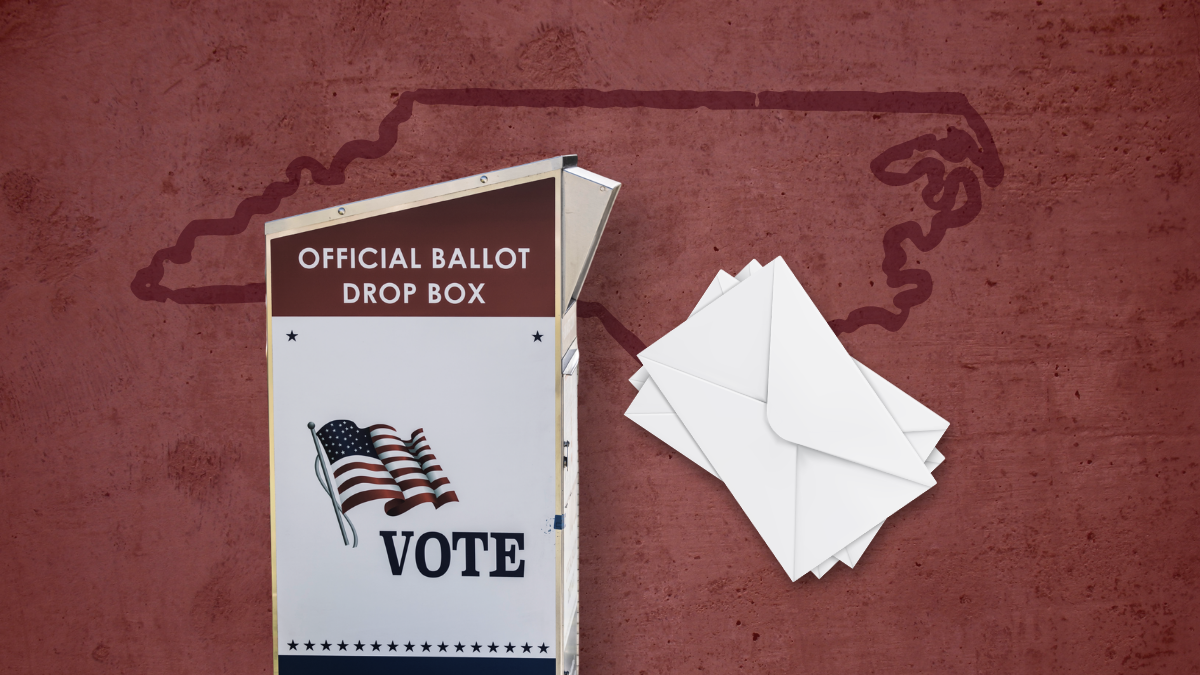
Hours before North Carolina began sending absentee ballots to voters, the Republican majority State Board of Elections approved new rules governing how those ballots must be returned, including requirements that could result in some ballots being rejected and replaced because of envelope errors.
The State Board voted 3-2 along party lines to approve two numbered memos concerning absentee voting. The board took up the measures after more than 10 people formally objected and requested legislative review. The memos were made public at 7:09 a.m., just hours before the first absentee ballots were scheduled to be mailed at noon.
“I do not understand the need for secrecy,” Democratic board member Siobhan Millen said at the beginning of the meeting.
Republican members described the measures as administrative guidance intended to protect election security. Democratic members questioned the timing and argued that the changes could create additional hurdles for voters.
“What are we doing here?” Democratic board member Jeff Carmon asked.
One of the measures addresses how absentee ballots are sealed and returned. North Carolina absentee-ballot materials include an inner envelope for the ballot and an outer envelope used to return the ballot by mail. Up until now, an improperly sealed envelope would simply be considered a “non-material error,” and the vote would still count. Under the new guidance, certain envelope problems can require a ballot to be spoiled and a replacement ballot issued.
The rules address ballots returned in the wrong envelope, ballots that arrive unsealed in the correct envelope, and ballots whose inner envelopes have been opened and resealed. In certain circumstances, those ballots can be rejected and a replacement ballot issued rather than counted as originally submitted.
The changes prompted concerns from Millen, who said seemingly minor technical errors can affect whether a ballot is ultimately counted.
“It affects whether your ballot counts and that’s huge,” Millen said. “I think people do care, not just whether they sent a ballot in, but whether it ended up counting.”
Millen said county election officials had told her that between 3% and 20% of absentee ballots could contain these small technical errors in a given election.
Board Secretary Stacy “Four” Eggers IV said the new guidance “will not change what voters experience.” Millen disagreed, noting that the consequences of an improperly completed or sealed ballot could ultimately affect whether a voter’s ballot is accepted.
The second measure concerns who may assist with returning an absentee ballot. Only a voter’s “near relative or legal guardian” may have any role in handling the ballot. While there are exceptions for voters who require assistance because of a disability, this rule creates barriers for out-of-state students who want to vote in their home state.
Republican members argued that the measures would eventually receive approval from the Republican-led General Assembly and characterized the board’s action as a mere administrative step.
Millen said legislative review should involve consideration of the objections submitted by voters rather than simply approving the measures.
“Legislative review doesn’t just mean rubber-stamp it,” Millen said. “It should mean, let’s take into account these 10 objections we’ve gotten and see if we need to make some tweaks or changes. Legislative review — those words ought to have a meaning.”
The timing of the decision was another source of disagreement. The board adopted the guidance on the same morning that the first absentee ballots were being mailed to voters who had requested them. Millen also noted that details of the changes were not made public until shortly before the meeting.
After the vote approving these changes, Stein called the decision a “slap in the face to voters who stood up to these changes” and urged voters to pay attention to updated election guidance.
“North Carolina voters deserve transparency in their elections, not last-minute workarounds that could keep their vote from counting,” Stein said.
The dispute comes amid other changes to North Carolina’s election procedures, including changes affecting early voting and polling locations. The Board reduced Sunday voting hours and cut polling sites on multiple college campuses.
For voters using absentee ballots, election officials advise carefully following the instructions included with the ballot materials. Stein said voters should request an absentee ballot by 5 p.m. Oct. 20 and return their ballot as soon as possible.
North Carolina voters can track their ballots using the statewide BallotTrax system.
For voters who prefer to vote in person, you can register to vote or update your voter registration online, or in person at your local DMV office. People can also register by mail. The deadline for registering or updating your registration is October 9th at 5:00 p.m.; however, during early voting in North Carolina, people can register or update their registration in person when they go to vote.
Additionally, during early voting, people can vote at any early voting location in their counties, whereas on Election Day voters must vote at their designated Election Day polling location.
Early in-person voting begins October 15th and ends October 31st at 3:00 pm. Election Day is November 3rd.