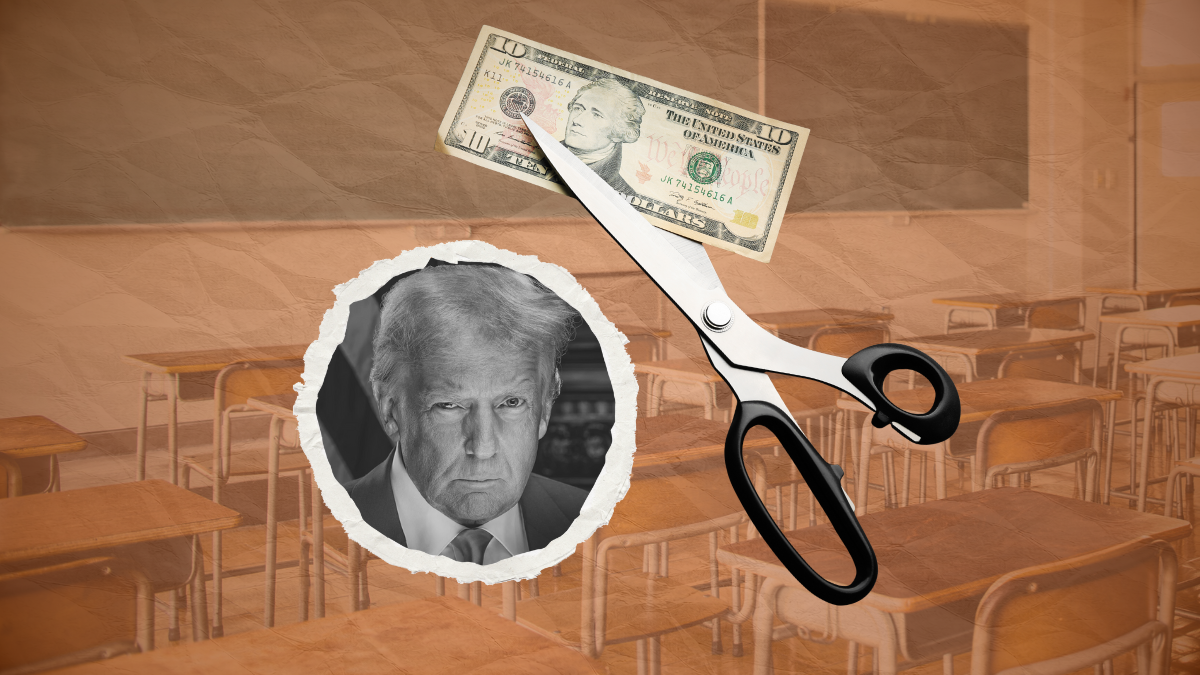
On the final day of 2025, the North Carolina Department of Justice filed a lawsuit against the Trump administration. Attorney General Jeff Jackson accused the federal government of illegally cutting almost $50 million in grant money meant for fifty-five schools spread across eighteen of North Carolina’s rural and low-income school districts.
The grants were part of the Full-Service Community Schools program, which was approved and funded by Congress in 2023. The US Department of Education gave schools only a few weeks notice that the money would not arrive as planned.
The grants in question have been used to maintain student programs and to bring on more school staff. They were also a vital lifeline for some of the families in Western NC following Hurricane Helene. Multiple school districts were able to use the money to help students’ families find temporary housing.
In the notification letter sent by the US Department of Education, the reason given for why the grants are being withheld was that the grant money goes toward “…programs that reflect the prior administration’s priorities and policy preferences and conflict with those of the current administration.”
Jackson argues that the move violates the US Constitution, which gives Congress sole authority to decide how federal funds are spent, not federal agencies or even the President. A federal agency cannot refuse to issue the funds Congress has instructed it to simply because the person currently in the White House dislikes the causes or groups the funds are meant for.
Jackson’s office warned that losing the funding would force schools to shut down programs and could lead to layoffs in the middle of the school year. “Our kids deserve better,” Jackson said in a statement. “A surprise cut of nearly $50 million from rural schools, with virtually no notice and no allegation of misuse, is unlawful and harmful.”
The current lawsuit harkens back to last July, when the NCDOJ successfully sued the Trump administration in a separate and much larger attempt to freeze education funding. The Department of Education froze billions in nationwide funding, including $165 million for NC. Jackson joined 24 other state attorneys general and won the full release of the funding.
North Carolina schools recently ranked next to last in the nation for cost-adjusted funding per student. The problem is especially concentrated in schools in rural and low-income communities. NC Superintendent of Public Instruction Mo Green is working to enact his plan to transform NC public schools into the best in the nation. The state legislature and high court, on the other hand, are a very different story.
Lawmakers in the Republican controlled NC General Assembly have still not passed a state budget that was due last July. This leaves NC as the only state in the nation trying to operate without a budget. This means uncertainty for schools as to what they can afford to provide students; it also means no pay raise for teachers who are facing increased health insurance costs.
In December, the NC Supreme Court delayed making a decision in the long-fought Leandro case. The case centers on a guarantee in the NC Constitution that the state will provide the “opportunity for a sound basic education.” Previous decisions in the case, which now stretches three decades, have ruled that NC has a duty to fully fund public schools; a detailed multi-year plan was even provided to lawmakers at one point. The current court made the surprising choice to take up the case again in 2023, after Republicans won a 5-2 majority. Oral arguments were made in February of 2024, making this one of the longest ever stretches between the court hearing arguments and issuing a decision.