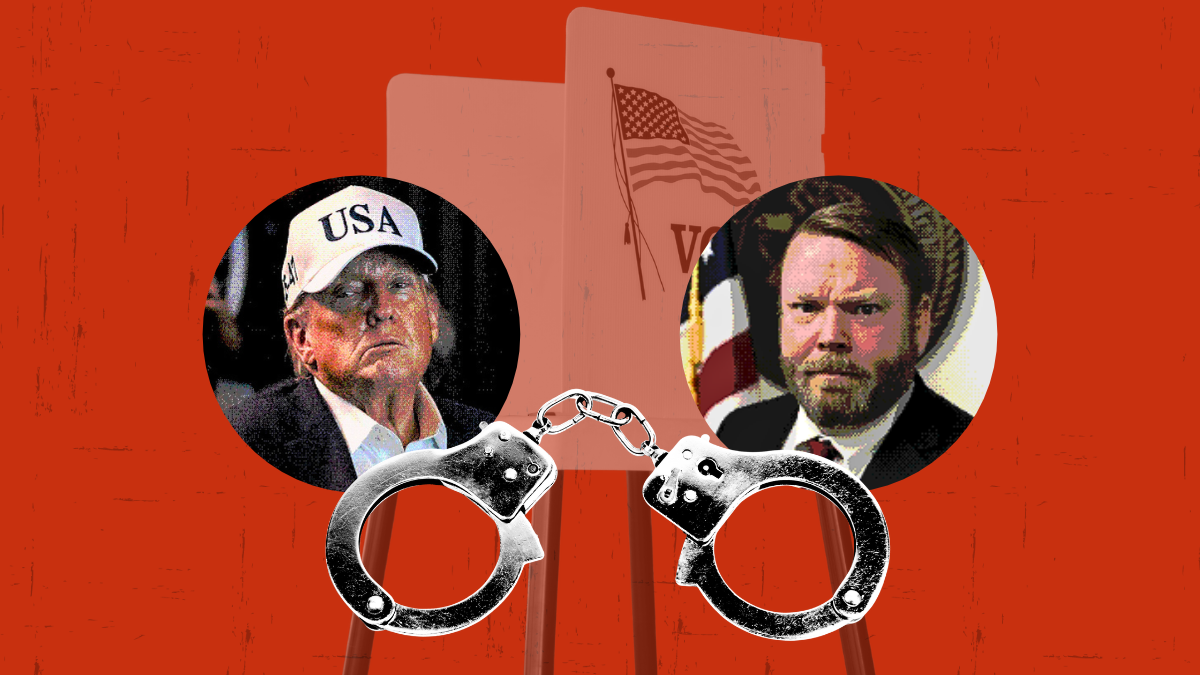
One day before early voting began in North Carolina, the press received notice of the next morning’s federal court appearances and an afternoon press conference with U.S. Attorney Ellis Boyle. The next day, reporters saw defendants accused of election crimes brought into court shackled at the ankles, wrists and waist. Nine of the ten were ordered released later that day, despite having been paraded into court like Hannibal Lecter.
People who knowingly vote illegally should be prosecuted. But that does not require turning the opening day of early voting into a production calculated to intimidate voters and undermine confidence in their elections. The court records show how that spectacle came together.
Seven defendants were indicted October 6. Prosecutors asked to seal their indictments, and Magistrate Judge Brian S. Meyers granted those requests. On October 13, the government moved to unseal all seven cases. Meyers approved those motions on October 14.
Three additional indictments were filed October 14. Nine defendants were arrested that day; the tenth had been arrested the day before. All ten had initial appearances October 15.
Sealing an indictment while arranging an arrest is ordinary procedure. But that does not explain why these cases were brought together for a public announcement on the opening day of early voting. Boyle called the timing coincidental. The court records give us ample reason to question that.
And Boyle has given us other reasons to question his independence. Bloomberg Law reported that Boyle saluted Trump during his introductory staff meeting. That is a strange and unsettling introduction for someone entrusted with the power of a federal prosecutor. His obligation is to serve the American people, not the president. The distinction appears lost on him.
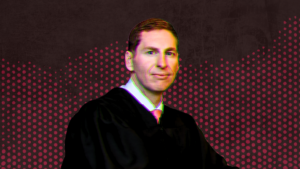
Meyers’s role deserves an accurate accounting, as well. On October 1, Trump announced his nomination to a lifetime federal district judgeship. Just thirteen days later, Meyers signed the seven unsealing orders. While those dates do not establish motive, they do establish his participation in a sequence the public has every right to examine.
Ten cases do not establish that North Carolina’s elections are riddled with fraud. Nor does an indictment settle whether someone deliberately deceived election officials. Robert Corbett, born in Canada and adopted by an American mother, told reporters he believed he was a citizen. Lawton McKenzie said he received mail inviting him to register and presented his legal resident identification card when he voted. These accounts deserve examination in court. Boyle offered a sweeping indictment of the election system instead.
Standing beside Boyle at the press conference was State Elections Director Sam Hayes, who has championed voter suppression from his days as a lawyer for Republican legislative leadership to his current role overseeing North Carolina’s elections.
Under the state board’s new rules, a mail ballot can be rejected because its inner envelope is unsealed, even when the outer envelope is sealed. Using data compiled by Common Cause North Carolina and its partners, Democracy Docket projected nearly 4,000 mail ballots could be rejected if the overall rejection rate holds.
Counties offering Sunday voting have fallen from 40 in the last midterms to 17.
Republican-controlled boards have also moved early voting away from Black communities and made it harder for college students to vote. They moved sites off Elizabeth City State University’s campus and away from N.C. State’s student union, and rejected proposed sites at N.C. A&T and UNC Greensboro.
Boyle says even one illegal vote undermines the entire system. That concern disappears when eligible voters lose their ballots to envelope rules or their opportunity to vote due to cuts in sites and hours. The officials demanding that we fear illegal voting are helping erect barriers to lawful voting. Their concern becomes remarkably selective when the voters facing those barriers are people their party would rather not hear from.
As attorneys, our obligations to the rule of law do not disappear when a political ally takes office.
That is why responsibility must remain personal. Government motions have authors. Court orders have signatures. Press conferences have speakers. Each person will have to answer for the role they chose to play.
This administration will end. Its departure should bring a full accounting of how public power was used, including independent investigation and professional or legal consequences wherever the evidence supports them. Following orders will not absolve anyone of responsibility for their own decisions.
Terence Everitt, Executive Director, NC Voter Protection Alliance