Source: WRAL
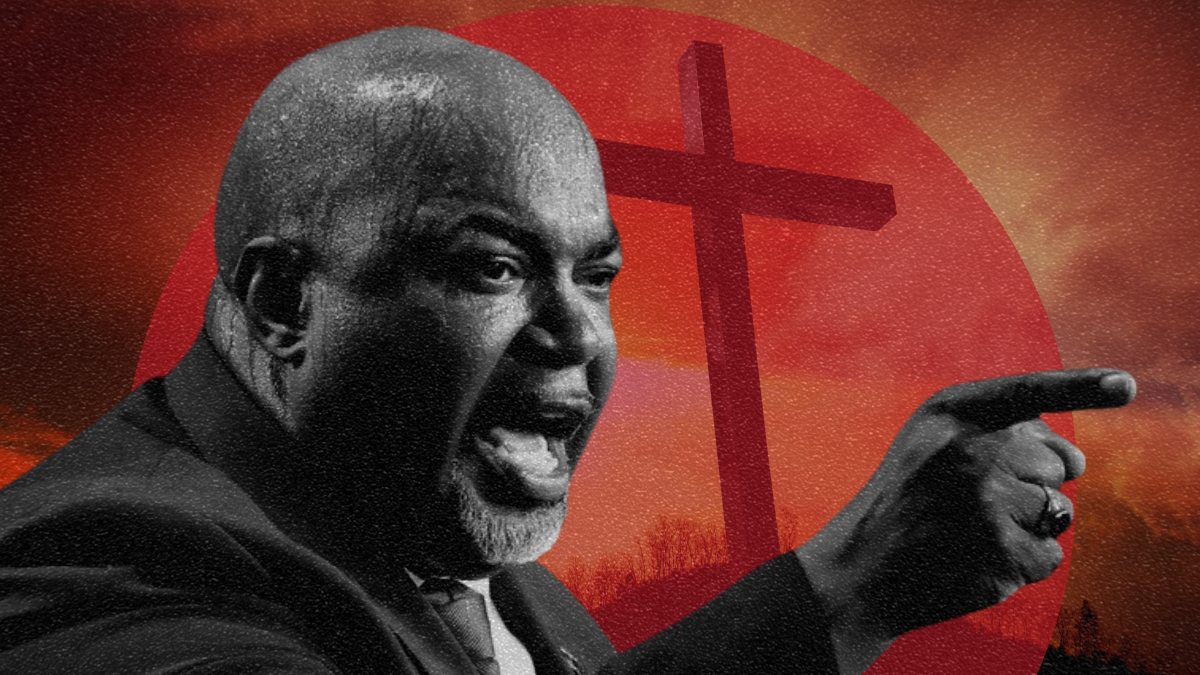
For perhaps the first time, Lt. Gov. Mark Robinson aimed his hate and vitriol at his fellow Republicans. It happened while speaking in a church at a Davie County GOP Christmas event earlier this month, WRAL reported.
His comments, which were captured on video by an event attendee, resulted in raised eyebrows and concern among some in the NCGOP.
At the end of a more than 25-minute speech, Robinson seemingly called for divine retribution on the GOP candidates running against him for governor and their supporters.
“I don’t have to listen to those in my own party who have watched as my back has been whipped by our enemies, who refuse to stand up with me because they’re cowards,” Robinson yelled from the pulpit. “I don’t have to worry about it. Because one day, Jesus Christ is going to ride back to this Earth on that white horse. When he does, he’s going to bring his vengeance.”
WRAL News asked the Robinson campaign to explain his call for vengeance on his Republican opponents. The campaign’s spokesperson said Robinson is “bold and outspoken” about his views on Christianity. The spokesperson added, “Politics can be a rough business” and that the “quote doesn’t refer to any one person.”
Republican State Treasurer Dale Folwell, one of those Republican opponents Robinson called for Jesus to get his vengeance on, brushed aside the comments and called out Robinson’s antics.
“Anytime that Mark Robinson talks, he’s always playing the victim,” Folwell told WRAL News. “We all know how Mark Robinson feels about women, how he feels about Jews and many other [groups]. But the fact is that there’s no place in state government for that type of rhetoric.”