Source: NC Newsline
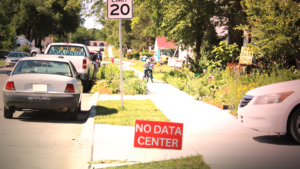
The peaceful morning tranquility of Jill Hoffman’s 16-acre wooded retreat has been shattered by the relentless hum of Dominion Energy bulldozers. The proposed Moriah Energy Center, a liquified natural gas storage facility, is taking shape just two miles away, casting a long shadow over the lives of residents in southeastern Person County.
“These chemicals cause cancer, these chemicals cause a multitude of other diseases. These chemicals damage our environment,” Hoffman declared at a heated public hearing. She was one of dozens who voiced fervent opposition to the project.
The hearing, held at Vance-Granville Community College, was filled with concerned citizens. Their anger and frustration boiled over as speaker after speaker condemned the facility.
Jeff Hammarquist, a local farmer, painted a bleak picture of the potential consequences as he explained that the pollutants will make the land uninhabitable for miles. “We cannot and will not relocate,” Hammarquist declared.
While Dominion Energy touted the facility as a boon to the economy, providing cost-effective energy solutions, residents remained unconvinced. They expressed deep-seated concerns about the potential health risks, environmental damage, and the erosion of their quality of life.
Environmental justice advocates also raised alarm bells, highlighting the disproportionate impact on communities of color. Katie Moore, an environmental justice and air quality researcher, urged the permitting agency to reconsider its approach, arguing that it’s failing to meet environmental justice goals.
The fate of the Moriah Energy Center now rests in the hands of the North Carolina Department of Environmental Quality, which will review public comments and make a final decision.
For residents like Jill Hoffman, the wait is agonizing. Their homes, their health, and their future hang in the balance.