
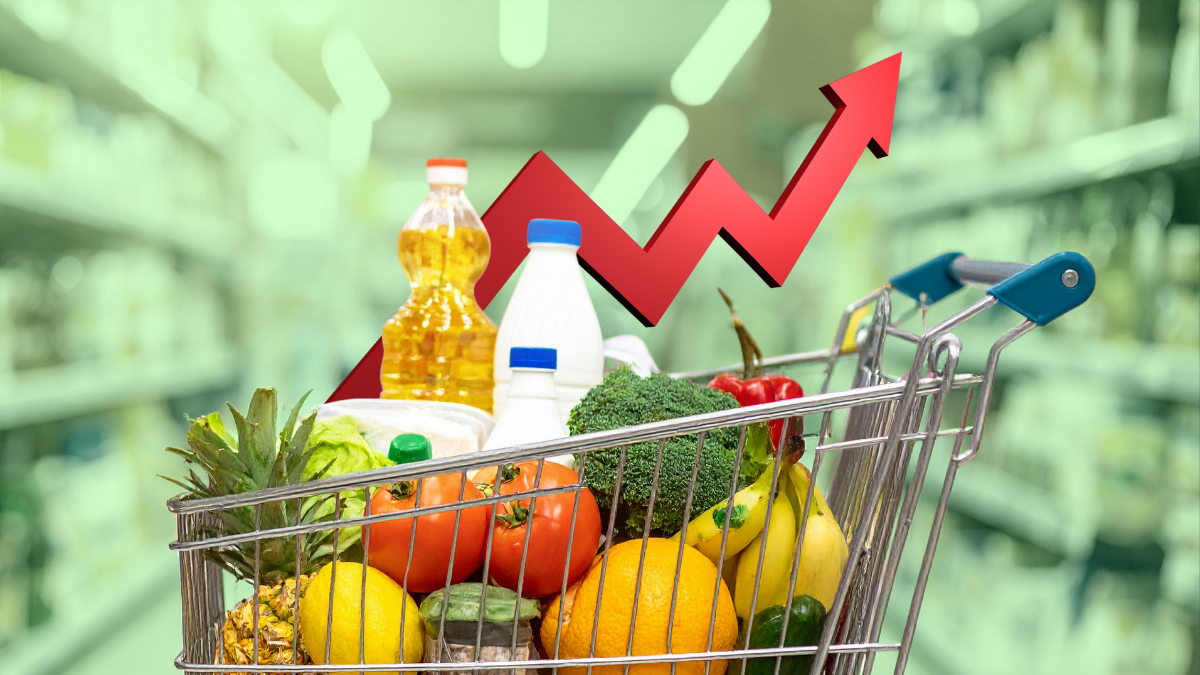
As summer gets underway and families should be enjoying holiday cookouts, many across the country are instead faced with the double blow of rising grocery prices and federal cuts to food assistance.
Despite campaigning heavily on the price of food in 2024, President Trump has failed to rein in rising grocery prices. The price of ground beef has increased more than 21% since Trump took office, now selling for a nationwide average of $7.08 per pound.
At the same time, his administration’s signature spending bill, the One Big Beautiful Bill Act (OBBBA), is expected to further strain state governments and charities that provide food assistance.
In addition, with OBBBA ending work requirement exemptions for older adults, homeless people, veterans, and some rural residents, among others, further benefit cuts are expected.
In North Carolina, the N.C. Department of Health and Human Services warned lawmakers last year about the impact of the OBBA ending work requirements, with the agency anticipating over 90,000 adults would lose their benefits.
Over 1.3 million people in about 676,000 households rely on SNAP benefits, according to NC DHHS. In addition, SNAP supports jobs and local economies across the state— particularly in rural communities, where food benefits help sustain local grocery stores.
The cuts under the Trump administration will strain many of these same communities and harm the wallets of farmers and small grocery businesses that rely on the federal program.
Already, more than 4 million Americans have lost their SNAP food benefits between February 2025 and February 2026.
West Virginian Raine Gibbons said her monthly SNAP benefits were reduced to just over $300 per month for her family of five.
“It’s really, really stressful,” Gibbons said. “It’s so hard to stay present and be the parent that you want to be when you’re worried about those daily struggles of just how to feed your family.”
Gibbons said SNAP is an essential support for many families.
“It’s really what’s keeping families like mine — who do work outside of the home, who do have a full-time job — afloat to be able to feed our families and our babies, and try to just get through this economy.”
Food banks are also feeling the strain. In St. Louis, ground beef has become too expensive for Ritenour Co-Care Food Pantry to offer.
Last year, Ritenour spent about $120,000 on food. The pantry budgeted $180,000 for this year, though its Executive Director, Angela Gabel, said that may not be sufficient. On a recent weekday morning, the pantry signed up seven new families and expected to add 15 by the end of the day. Gabel said more people are traveling further to visit multiple food pantries each month to stock their shelves.
“I’m absolutely terrified,” Gabel said. “We will absolutely do our best, but I think we were meant to supplement SNAP or to help in emergency situations. I just don’t think we can replace the government.”
Democrats in Congress have been working to rescind SNAP cuts for months, including in negotiations over the reauthorization of the federal farm bill, which includes SNAP.
North Carolina Attorney General Jeff Jackson was one of 23 attorneys general who wrote to Senate leaders considering the farm bill, urging them to “reverse course and reaffirm a bipartisan commitment that no American should go hungry because they cannot afford food.”
But Republicans, who control both chambers of Congress, continue to downplay the effect of the changes and defend SNAP cuts – in the latest version of the farm bill passed by the U.S. House, the big GOP cuts to food assistance were kept intact.