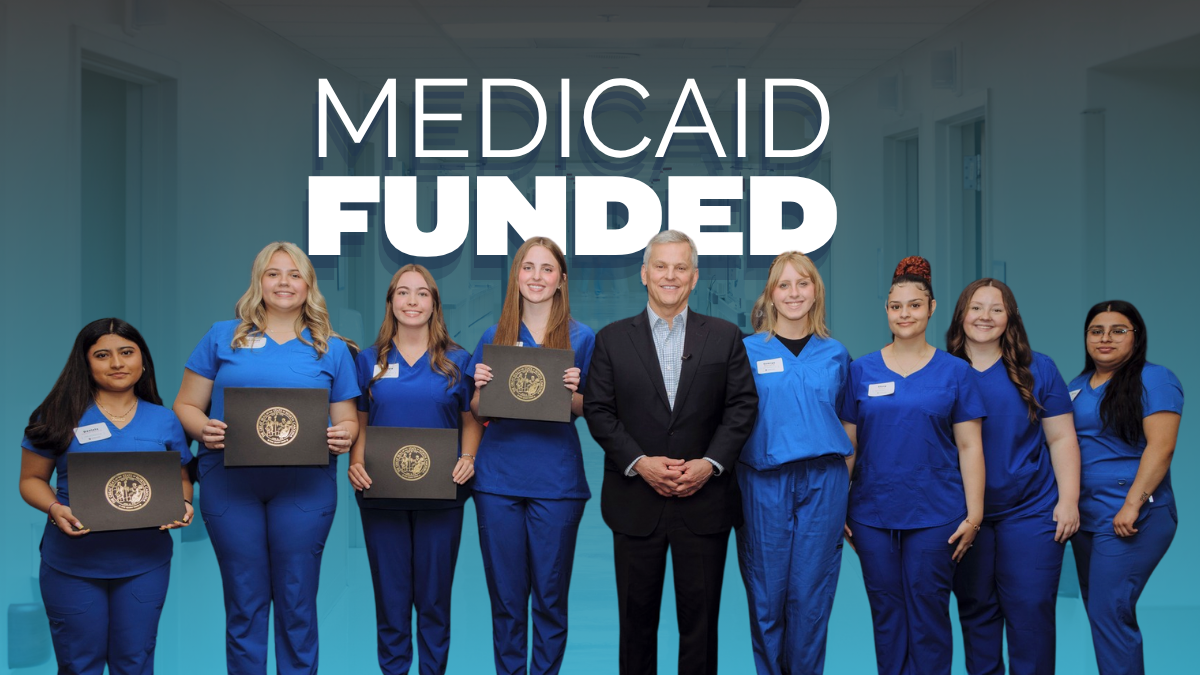
After months of state officials raising alarm bells about North Carolina’s Medicaid program being at risk due to a lack of funding, lawmakers passed a bill to fully fund the program. North Carolina Governor Josh Stein signed the bill into law to keep the vital program running, but not without noting some of the “serious flaws.”
Medicaid provides healthcare for millions in the state, including more than 725,000 people who joined the program through Medicaid expansion, which was signed into law by former Governor Roy Cooper in 2023. Governor Josh Stein has been urging lawmakers to pass Medicaid funding since the lapse of the state budget last June, which usually contains funding for state programs like Medicaid. The Department and Health and Human Services (DHHS) warned that the program would run out of funding at the end of May.
House Bill 696 was introduced by Republicans and quickly voted on shortly after lawmakers gaveled in for the short session. In the bill, lawmakers allocated one-time, non-recurring funding of $319 million that provides the DHHS with enough funds to continue running the program. However, as noted by advocates and some Democratic leaders, including Stein, the bill comes with additional provisions that create obstacles and increase the price of care for those in the program, even removing some individuals from the program altogether.
In a press release, Stein urged lawmakers to pass recurring funding in the future to avoid instances like this, where there’s a risk of many losing healthcare. Continuing on the note of losing coverage, Stein stated his dismay at a provision in the bill that would immediately revoke healthcare coverage for nearly 27,000 children and pregnant women due to immigration status. These are individuals who are lawfully in the United States, including green card holders and refugees, with some being victims of human trafficking. Lawmakers did note that this is due to an error in the bill, but have given no timeline as to when it will be remedied.
Additionally, the bill included a provision that raises certain copays for Medicaid to the maximum amount allowable under federal law at a time when North Carolinians are already feeling squeezed by rising prices in healthcare, at the pump, and at grocery stores.
Stein noted these concerns but signed the bill regardless because it “moves North Carolina forward.”
“Nevertheless, this bill moves North Carolina forward by addressing many critical needs facing state government and the people we serve,” Stein wrote.
Also added into the bill are stricter work requirements, mirroring those found at the federal level in H.R. 1, The One Big Beautiful Bill Act, which makes several changes to Medicaid. The federal legislation laid out new requirements and eligibility standards for Medicaid. States will have to keep up with these new mandates or lose federal funding. That remains a separate battle as the state braces for the changes at the federal level. House Speaker Destin Hall has hinted at more Medicaid legislation to follow to adjust to federal changes.
Polling shows the majority of North Carolinians say Medicaid is important for healthcare access, and with the new legislation, Stein has reiterated his commitment to continuously improve the program.
“Fully funding Medicaid is critical for North Carolinians’ health and safety. I am pleased that we have come together on a bipartisan basis to get people the certainty and care they need,” Stein wrote. “Yet, this bill has serious flaws that I call on the General Assembly to fix during this Short Session […] I continue to hope for a productive short session and am committed to working with the General Assembly to construct a fiscally responsible, balanced budget that keeps North Carolina strong.”